
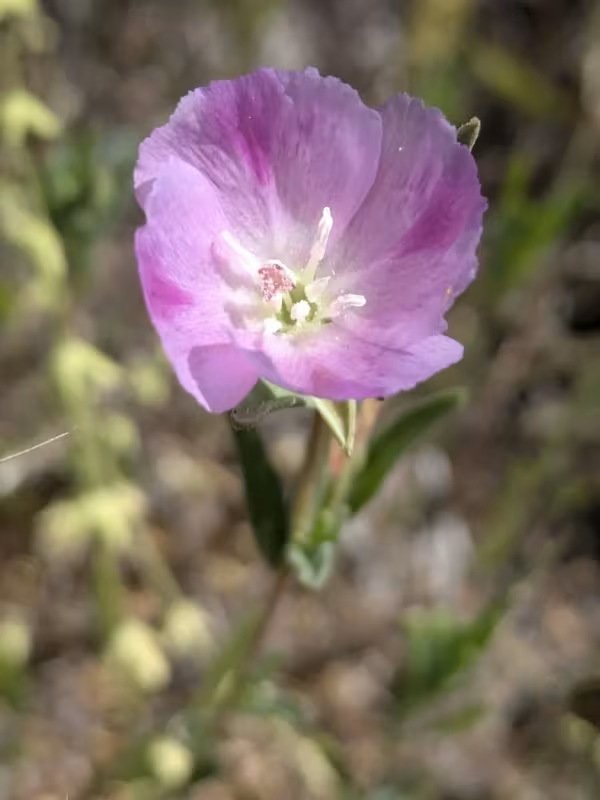
Clarkia amoena
Clarkia amoena (Lehm.) A. Nelson & J. F. Macbr. subsp. lindleyi (Douglas) F. H. Lewis & M. R. Lewis
Description
Sowing dates
Clarkia amoena is a cold-hardy annual species, and the optimal time for sowing seeds directly into the open ground is during April or May, once the danger of night frosts has passed. In regions with milder climates, late autumn sowing is possible, allowing for earlier blooming in the following season.
When using the transplant method, seeds should be sown in late March or early April using individual containers, as the plant is highly sensitive to root disturbance. Seedlings typically emerge within 10 to 14 days when the soil temperature is maintained around 18-20 degrees Celsius.
For successful growth, seeds should be sown in sunny locations with well-draining, nutrient-rich soil, ensuring adequate spacing between plants to prevent overcrowding. Thinning the seedlings is recommended at the stage of the first two true leaves, spacing plants 20 to 30 centimeters apart.
The culture demonstrates high germination rates when seeds are surface-sown or covered with no more than 0.5 centimeters of soil. It is crucial to keep the substrate moderately moist until mass germination occurs, preventing the soil surface from crusting over.
Consistent watering during the active growth phase encourages a robust root system and vigorous vegetative development. If agricultural timelines are strictly followed, flowering usually begins 70 to 80 days after the initial emergence of seedlings.
Growing requirements
Clarkia amoena belongs to the Onagraceae family and is native to North America, thriving in well-lit locations sheltered from strong winds. The plant is highly photophilous, and insufficient sunlight will lead to stunted, leggy growth and diminished flower quality.
The ideal soil profile includes well-draining, fertile loams or sandy soils with a neutral to slightly acidic pH level. The plant does not tolerate waterlogged conditions, which lead to rapid root rot and the overall failure of the flowerbed.
Climate requirements for this species are centered on moderate temperatures, as it prefers a cool summer growing season. Extreme heat and drought can cause premature cessation of bud formation, making light shading essential in warmer regions during the peak of summer.
Mineral fertilization is best applied during the bud-development stage, using formulations low in nitrogen but rich in phosphorus and potassium. Excess nitrogenous fertilizers promote unwanted leaf growth at the expense of floral display.
Water management must be balanced: the soil should remain consistently moist but never saturated. During periods of heavy rainfall, soil aeration through light hoeing is necessary to improve root respiration and prevent the onset of fungal diseases.
Main diseases and pests
The primary threats to Clarkia amoena are fungal diseases, which are exacerbated by high humidity and excessive moisture. The most prevalent issues include root rot and downy mildew, manifesting as yellowing leaves and sudden wilting of the plant.
Pests such as aphids and spider mites frequently target stressed or densely planted specimens. Systematic insecticides or acaricides can be used for control, though application should be completed before the peak blooming period to ensure the safety of pollinating insects.
Proactive disease management relies on crop rotation and maintaining proper spacing to facilitate air circulation. Clearing all plant debris at the end of the season is essential for reducing the inoculum load in the soil for the following year.
In cases of powdery mildew, copper-based fungicides or sulfur-containing treatments are highly effective. Early detection of infection patches is critical, as it allows for localized treatment and prevents the spread of fungal spores to healthy neighboring plants.
Choosing a site with excellent natural drainage and air movement is the most effective defense against pathogens. Limiting nitrogen intake in late summer significantly enhances the plant's natural resistance to environmental stress and fungal attacks.