
Reed sweet-grass
Glyceria maxima (Hartm.) Holmb.
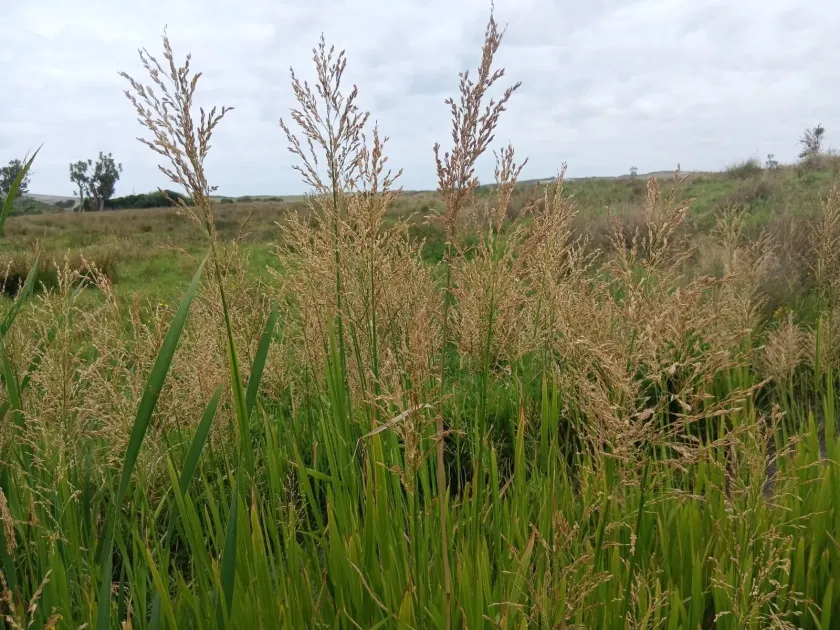
Description
Growing requirements
Reed sweet-grass (Glyceria maxima) is a robust perennial grass belonging to the Poaceae family. It is widely known for its ability to thrive in wet environments, including riverbanks, marshes, and flooded meadows.
The plant has a deep affinity for high-moisture soils. It performs best in areas with high water tables, where its rhizomatous root system can effectively anchor the plant and prevent soil erosion while absorbing nutrients directly from the water.
Climate requirements for this species are relatively broad. It shows excellent winter hardiness, surviving harsh freezes in northern climates while remaining productive throughout the long growing seasons in temperate regions.
Regarding soil conditions, G. maxima prefers nutrient-rich, silty, or alluvial soils. It can tolerate acidic as well as alkaline pH levels, provided the soil remains consistently moist or waterlogged throughout the growing cycle.
Cultivation practices primarily involve establishing the stand, after which the plant requires little maintenance due to its vigorous growth habit. It spreads rapidly via rhizomes, making it highly competitive against typical weeds.
Yield
The primary agricultural use of reed sweet-grass is as a fodder crop. It provides a reliable source of green mass in wetlands where traditional cereals or forage grasses would fail to survive due to excessive waterlogging.
Yield capacity is high when managed correctly. The grass is palatable to cattle and sheep, especially when harvested before the flowering stage, which ensures higher protein content and digestibility for the animals.
In addition to livestock feed, the plant is valued for its high biomass production. This makes it a potential candidate for sustainable biomass energy production, as it can be harvested from land that is otherwise unsuitable for agriculture.
Environmental benefits are a secondary but significant economic output. Reed sweet-grass is frequently used in constructed wetlands and riparian buffer zones to filter agricultural runoff and improve water quality.
Management for maximum yield requires periodic cutting to stimulate fresh growth. If left unmanaged for too many seasons, the stand may become too woody, reducing its nutritional value and overall quality as a forage resource.
Main diseases and pests
Glyceria maxima is naturally resistant to many pests and diseases that affect commercial cereal crops. However, dense stands can sometimes be susceptible to fungal infections like rust during periods of high humidity and stagnant air.
Insect pests such as stem-boring larvae may affect the growth of individual stalks, but they rarely threaten the survival or total productivity of an established colony in the wild or in a field setting.
The greatest threat to a cultivated stand is not a pathogen, but a sudden shift in hydrology. Prolonged drought periods are extremely detrimental, as the plant lacks the physiological mechanisms to survive in dry, depleted soils.
For sustainable crop management, maintaining the balance of the moisture level is crucial. Over-extraction of water or changes in local drainage can cause a rapid decline in the plant's health and lead to invasion by terrestrial weeds.
Farmers are advised to monitor for signs of chlorosis or stunted growth, which are often the first indicators of nutrient deficiency or soil degradation caused by imbalances in the aquatic environment.