
Gladiolus murielae
Gladiolus murielae Kelway & Langport ex anon.
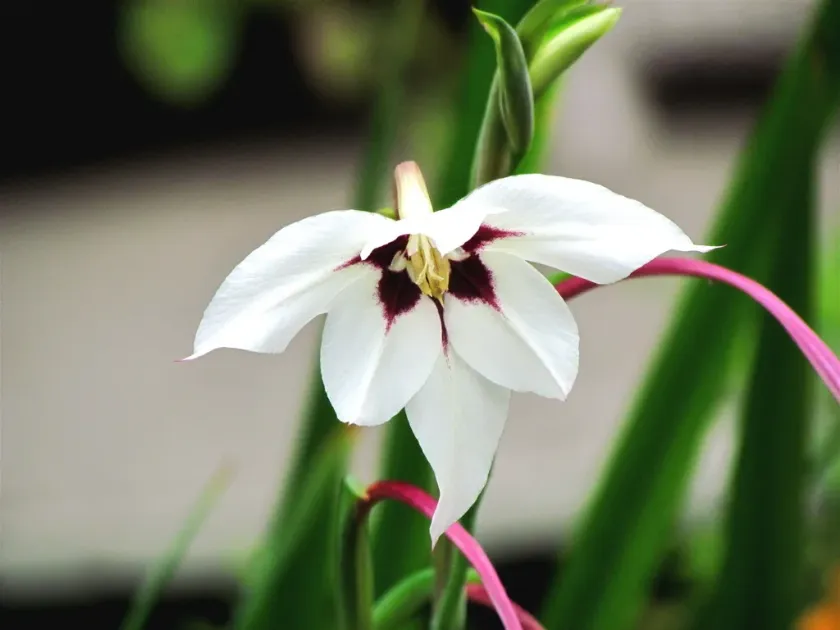
Description
Sowing dates
Gladiolus murielae, also commonly known as Acidanthera or the Peacock Orchid, should be planted in the garden once the soil has warmed up in mid-to-late spring.
Prepare the bulbs by cleaning off old scales and keeping them in a warm, bright spot indoors for a few weeks before planting to encourage initial root growth.
Plant the corms at a depth of 8–12 cm, depending on the soil texture. Light, sandy soils require deeper planting, while heavier soils require a shallower placement.
Space the plants 15–20 cm apart to ensure adequate airflow, which is critical for reducing the risk of fungal diseases during the humid summer months.
In colder regions with shorter growing seasons, starting the bulbs in pots indoors and transplanting them outside after the danger of frost has passed is highly recommended.
Growing requirements
The plant belongs to the Iridaceae family and demands a sunny location with exposure to at least six hours of direct sunlight per day to produce strong stalks.
Soil must be rich in organic matter, well-draining, and have a loose structure. Waterlogged conditions will inevitably lead to corm rot and total loss of the crop.
The ideal soil pH for this culture is slightly acidic to neutral. Incorporating compost or well-rotted leaf mold before planting significantly enhances the soil's fertility.
Consistent moisture is required throughout the growing season. While the plants need regular watering, they should not be left sitting in saturated soil.
Protection from strong winds is essential, as the tall, elegant flower spikes of Gladiolus murielae can easily topple over in open areas without support.
Main diseases and pests
Fungal diseases such as fusarium wilt and various soft rots are the most common threats, usually triggered by poor drainage and excessive moisture in the root zone.
Insect pests, primarily thrips and spider mites, can damage the foliage and flowers. Early detection is key to managing these populations effectively.
Crop rotation is a fundamental practice; avoid planting bulbs in the same spot for several consecutive years to break the cycle of soil-borne pathogens.
Treating the bulbs with a suitable fungicide before storage helps ensure they remain healthy throughout the dormant winter period.
If infestation occurs, the use of systemic insecticides may be necessary to protect the plant's health and maintain the aesthetic quality of the blooms.
Harvesting
Harvesting the corms must be completed before the first hard frosts of autumn. In most climates, this occurs during the latter half of October.
Carefully lift the corms from the ground using a pitchfork, taking care not to wound the flesh. Trim the foliage down to about 2 cm above the bulb.
Allow the harvested corms to cure in a dry, well-ventilated area away from direct sunlight for two to three weeks to ensure they are fully dried.
Store the clean, dry corms in breathable bags or wooden trays in a cool, dark environment where temperatures stay between 10–15°C until the next planting season.
Routine inspection of stored corms is essential; discard any that show signs of softness, mold, or rot to protect the integrity of your entire collection.