
Gerrardanthus paniculatus
Gerrardanthus paniculatus
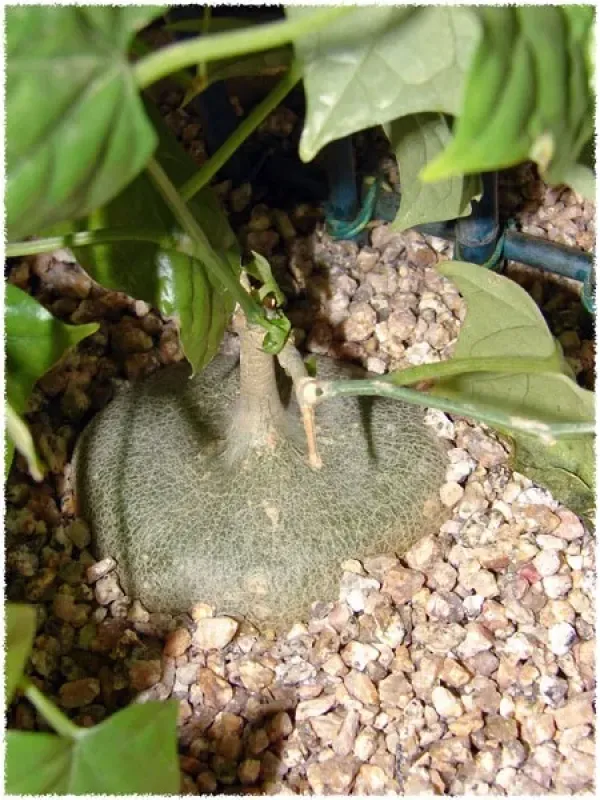
Description
Growing requirements
Gerrardanthus paniculatus is a fascinating member of the Cucurbitaceae family. It is a caudiciform plant native to tropical East and South Africa, often found in rocky, well-drained habitats where its thick stem serves as a vital water storage organ during dry seasons.
Cultivation requires bright, indirect light to encourage healthy vining growth. While it thrives in warm environments, it is crucial to protect the plant from harsh midday sun, which can dehydrate the aerial parts and cause damage to the caudex skin.
The soil must be extremely porous to ensure rapid drainage. A mixture composed of 50% inorganic material, such as pumice or perlite, and 50% organic matter is ideal. This composition prevents the risk of waterlogging, which is fatal to the plant.
Temperature management is critical for the survival of this species. It prefers a range between 20°C and 28°C during the growing season. In winter, temperatures should be kept above 12°C to prevent cold-induced shock or dormancy failure.
Watering frequency depends entirely on the growth cycle. During active growth, water should be applied only when the substrate has dried out completely. In winter, the plant enters a dormant phase where watering must be withheld or kept to a bare minimum.
Main diseases and pests
The most significant threat to Gerrardanthus paniculatus is root rot caused by improper watering practices. Excess moisture trapped in the substrate can lead to fungal infections that quickly compromise the integrity of the caudex.
Mealybugs are a common pest issue for this plant. They tend to hide in the joints of the vines and the crevices of the caudex, making them difficult to detect and eradicate without thorough inspection.
Spider mites are another prevalent nuisance, particularly in dry and poorly ventilated indoor environments. These pests can rapidly colonize the leaves, leading to yellowing and premature leaf drop if not addressed promptly.
Fungal leaf spots can occur if the humidity levels are consistently too high without sufficient airflow. Proper ventilation is essential for maintaining the health of the foliage and ensuring the long-term success of the plant.
To maintain plant health, use systematic insecticides or neem oil treatments for pests. Always prioritize preventative measures, such as maintaining a clean growing area and ensuring adequate spacing between individual plants.