
Gerrardanthus lobatus
Gerrardanthus lobatus
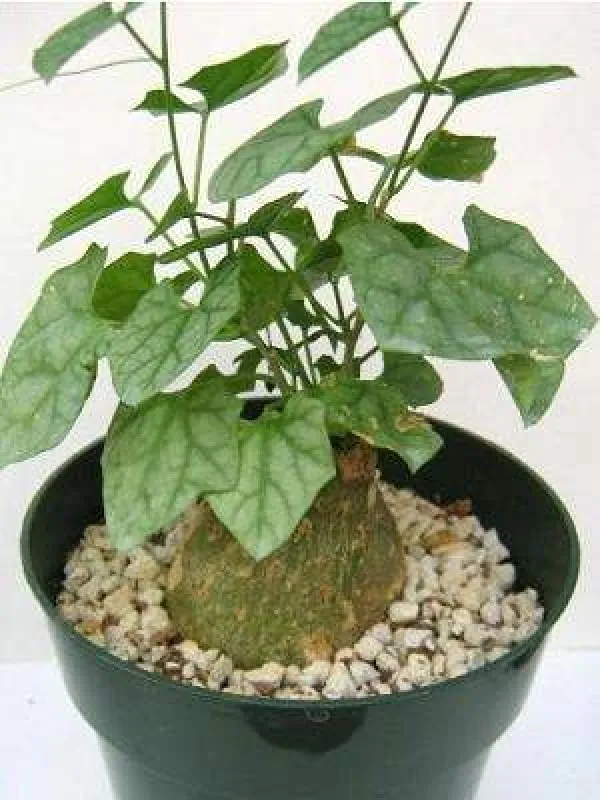
Description
Sowing dates
The propagation of Gerrardanthus lobatus is primarily achieved through seeds under controlled greenhouse conditions. Sowing is best performed in the spring when temperatures are high enough to stimulate germination.
Use a highly porous and well-draining substrate for sowing, typically consisting of a mix of pumice, coarse sand, and a small amount of peat. Sterile conditions are essential to prevent damping-off in seedlings.
Seeds should be covered with a thin layer of substrate and kept in a warm environment. Consistent moisture is required, but the medium must not be waterlogged at any stage of seedling development.
Once seedlings have developed their first true leaves, they require good airflow and bright, indirect light. Gradual acclimatization to higher light intensities is necessary to prevent sunscald.
Transplanting should be handled with extreme care to protect the developing caudex and root system, as damage at this stage can lead to rot or stunted growth.
Growing requirements
Gerrardanthus lobatus belongs to the Cucurbitaceae family but is specialized as a caudiciform plant, adapted to arid environments. Its primary biological feature is the enlarged, water-storing stem (caudex).
This species demands full sun exposure to maintain its compact habit and promote the thickening of the caudex. Insufficient light results in elongated, weak stems that lack the typical architectural look.
Soil requirements focus on drainage and aeration. A substrate that stays wet for too long will lead to the rapid decay of the root system and the base of the caudex, which is fatal to the plant.
Climate control involves maintaining warm temperatures during the growing season. In winter, the plant enters a period of dormancy, during which watering should be significantly reduced or stopped entirely.
Fertilization should be moderate, using balanced formulas with lower nitrogen content during the active growth phase to ensure steady and healthy tissue development without excessive vegetative expansion.
Main diseases and pests
The most prevalent threats are fungal rots, such as those caused by soil-borne pathogens in the presence of excessive moisture. Prevention relies on strictly controlled watering and high-drainage substrates.
Common pests include spider mites and mealybugs, which are particularly troublesome in warm, low-humidity greenhouse environments. These pests suck sap, leading to stunted leaves and damaged growth points.
Integrated pest management, including regular monitoring and the use of systemic insecticides, is necessary to control infestations. Organic controls may be used as a preventative measure during active growth.
Nematode infestations can also damage the root system, weakening the plant's ability to take up nutrients. Regular inspection of the root zone during repotting is a critical part of the maintenance routine.
Proper hygiene, such as removing dead foliage and maintaining clean tools, is vital to preventing the spread of diseases within the cultivation area, ensuring long-term plant health.