
Geophila repens
Geophila repens
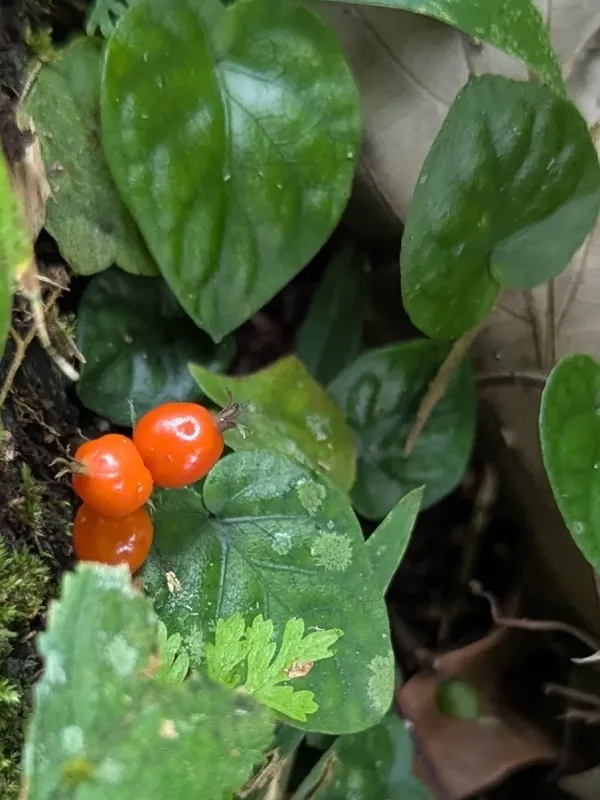
Description
Growing requirements
Geophila repens, commonly known as the creeping geophila, belongs to the Rubiaceae family. Native to tropical regions worldwide, it thrives in shaded, moist forest understories, acting as a low-growing, spreading groundcover that roots at the nodes.
Botanically, the plant features cordate or ovate leaves with a glossy finish, arranged oppositely along the stems. It produces small, white, tubular flowers followed by small, vibrant, fleshy fruits, which are a distinctive characteristic of the species within its family.
To successfully cultivate this plant, one must provide a consistently warm and humid environment. It is ideal for terrariums, paludariums, or climate-controlled greenhouses, as it lacks cold hardiness and struggles to survive in low-humidity indoor environments.
The substrate requirements include high organic content, excellent moisture retention, and effective drainage. A mixture of peat, perlite, and bark is often recommended to mimic the natural forest floor habitat and prevent the compaction of the root zone.
Cultural management involves maintaining high humidity levels, ideally above 70%, and providing bright, indirect light. It is an excellent plant for covering large surfaces in tropical vivariums where aesthetic, dense, and lush green growth is required.
Main diseases and pests
Spider mites are the most common pests, particularly when humidity drops below optimal levels. Frequent misting and proper plant spacing are effective cultural practices to deter these pests and maintain foliage health.
Root rot, driven by stagnant water and overly dense soil, poses a significant threat to the survival of the plant. Ensuring the container has adequate drainage holes and avoiding overwatering are critical for maintaining healthy root systems.
Fungal leaf spot diseases may occur if water persists on the foliage in low-light, cool conditions. Improving airflow around the plant canopy helps evaporate excess surface moisture and prevents the colonization of pathogenic fungi.
Mealybugs can infest the nodes and underside of leaves, causing stunted growth and yellowing. Treatment usually involves mechanical removal or the application of gentle insecticidal soaps specifically formulated for houseplants.
Soil-borne pathogens represent a risk if non-sterile or contaminated soil is introduced to the growing environment. Using high-quality, treated commercial potting mixes significantly reduces the risk of soil-dwelling pests and pathogens.