
Geophila obvallata
Geophila obvallata
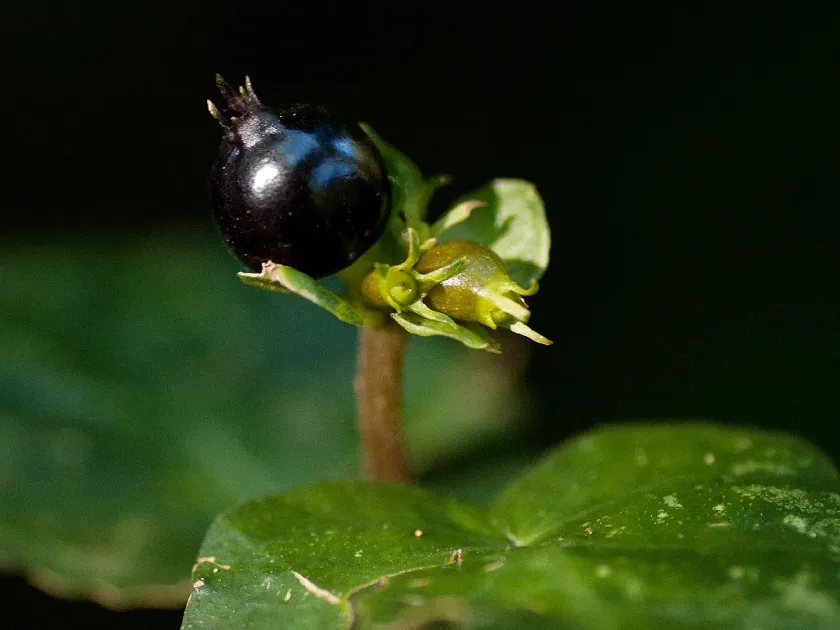
Description
Growing requirements
Geophila obvallata is a perennial herbaceous plant belonging to the Rubiaceae family. Native to tropical forest ecosystems, this plant thrives in humid, shaded environments and is primarily known for its creeping habit.
The plant produces stolons that root at the nodes, allowing it to form a dense vegetative mat. Its leaves are typically cordate or ovate in shape, arranged oppositely along the stems, and display a glossy texture that is well-adapted to low-light conditions.
Climate requirements include high ambient temperatures and consistent humidity levels throughout the growing season. It performs best in partial shade, mimicking the forest understory where protection from direct sunlight is crucial to prevent leaf scorching.
Soil quality must be high in organic matter and maintain moisture consistently. While the plant prefers well-draining soil, it cannot tolerate prolonged dryness, as its root system is relatively shallow and requires constant access to water.
Its primary agricultural and horticultural value lies in its role as a ground cover plant for tropical garden designs and soil stabilization projects. It is appreciated for its ability to prevent erosion in shaded, moist areas.
Main diseases and pests
Fungal pathogens represent the most significant threat to Geophila obvallata, especially in environments with poor air circulation. Excessive moisture on the foliage can lead to rapid development of molds and leaf spot diseases.
Pests such as spider mites and mealybugs can infest the foliage, particularly during warmer, drier periods. These pests stress the plant by extracting cell sap, which can significantly weaken its overall vigor if left untreated.
Soil-borne nematodes are a silent threat that can damage the root system, leading to stunted growth and yellowing of the leaves. Proper soil management and the use of certified healthy planting material are essential for control.
Weed infestation is a major issue during the establishment phase, as the plant spreads relatively slowly at first. Keeping the growing area free of aggressive weeds is necessary to ensure the plant can successfully dominate the site.
Environmental stress, such as sudden drops in temperature or exposure to dry winds, can lead to leaf senescence and a decline in health. Protecting the plants from extreme temperature fluctuations is vital for long-term survival.