
Geophila herbacea
Geophila herbacea
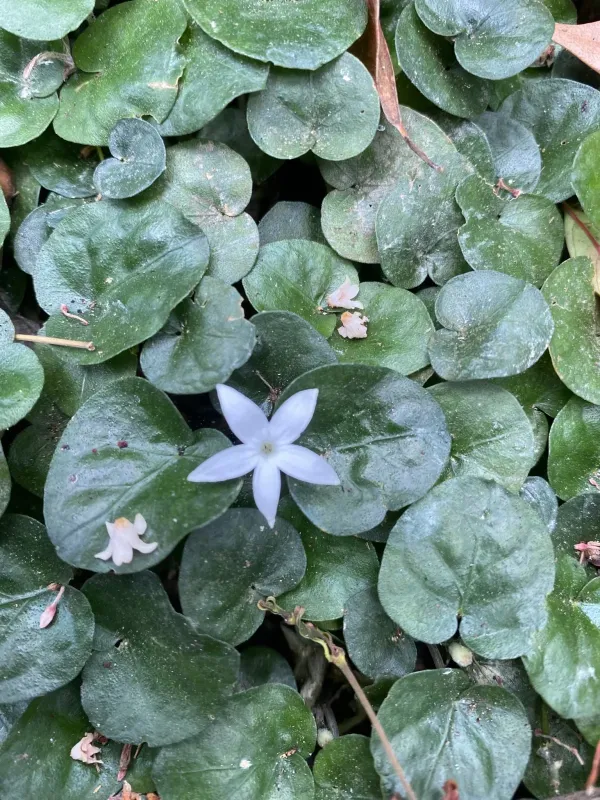
Description
Growing requirements
Geophila herbacea is a perennial herbaceous plant belonging to the Rubiaceae family. Native to tropical regions of Asia, Africa, and the Americas, it thrives in shaded and humid environments, typically within forest understories.
The plant features creeping stems that readily root at the nodes, allowing it to function as an effective ground cover. It requires consistently high humidity and warm temperatures to maintain active growth throughout the year.
Soil requirements for this culture include high organic content, loose texture, and excellent moisture retention. Good drainage is essential to mimic its natural environment without promoting anaerobic conditions around the root system.
In terms of propagation, it primarily utilizes creeping stolons to expand. It is sensitive to direct sunlight, which can scorch its delicate foliage, making partial to full shade necessary for cultivation.
The plant has long been utilized in traditional medicine. It is often employed for its antibacterial and anti-inflammatory properties, serving as a remedy for various dermatological and gastrointestinal ailments.
Main diseases and pests
Fungal infections remain the primary threat to Geophila herbacea, especially in indoor environments where air circulation is restricted and moisture levels are high.
Root rot is a common issue caused by poor drainage or excessive irrigation. It is critical to monitor the substrate moisture to prevent the decay of the creeping stems.
Pests such as spider mites and thrips are significant concerns in greenhouse production. They thrive in warm conditions and can quickly compromise the plant's health.
Effective management includes regular monitoring for early signs of infestations or decay. Improving ventilation is often the best preventative measure against both fungal and pest issues.
When necessary, light applications of organic fungicides or insecticidal soaps can be used to treat early infections, ensuring the plant remains suitable for its medicinal applications.