
Geonoma pohliana
Geonoma pohliana
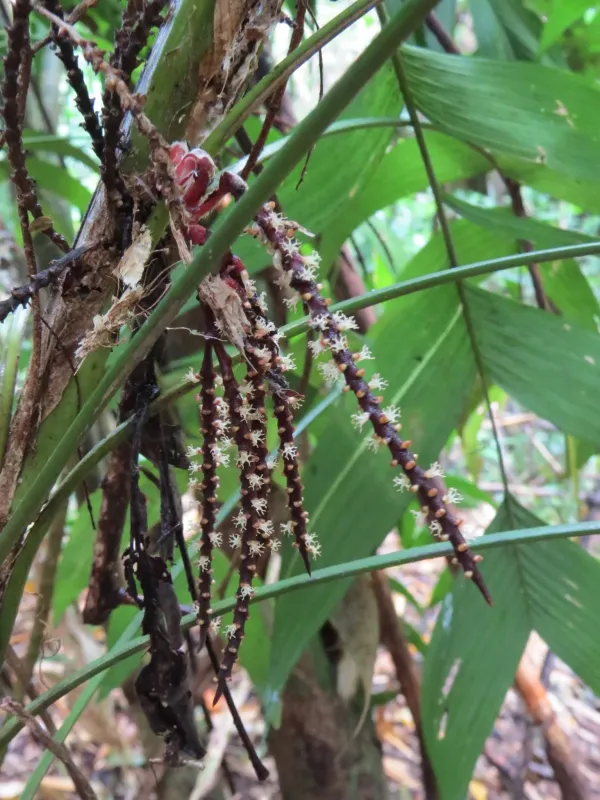
Description
Growing requirements
Geonoma pohliana is a species of palm tree belonging to the Arecaceae family. It is native to the lush, humid understory of tropical rainforests in South America, specifically favoring shaded and protected environments.
In cultivation, this plant requires constant warmth, ideally between 22°C and 28°C. It is highly sensitive to cold drafts and significant temperature fluctuations, which can damage its delicate foliage.
The ideal growing medium must be well-draining, acidic, and nutrient-rich. A mixture of peat moss, perlite, and organic compost effectively mimics the natural leaf litter layer where the plant thrives in the wild.
Consistent moisture is essential for this species. Watering should be frequent enough to keep the substrate damp but never soggy, as stagnant water is a primary cause of root failure in this tropical palm.
The primary horticultural use of Geonoma pohliana is ornamental. It is widely prized by collectors for its elegant, pinnate leaves and its ability to adapt to low-light indoor environments, making it a staple for interior greening.
Main diseases and pests
Spider mites are the most common pest for Geonoma pohliana, especially in indoor environments where the air humidity is insufficient and the ambient air is dry.
Mealybugs can also infest the plant, colonizing the leaf axils and stems, which requires immediate manual removal or the application of horticultural oils for control.
Root rot is a significant threat typically induced by overwatering. It is characterized by the browning of leaf tips and the softening of the base of the plant stem.
Fungal leaf spots can develop if the foliage remains wet for extended periods in environments with poor air circulation, necessitating improved ventilation.
General maintenance should include regular cleaning of the leaves to remove dust and prevent the accumulation of pests, ensuring the plant retains its ornamental health.