
Geonoma deversa
Geonoma deversa
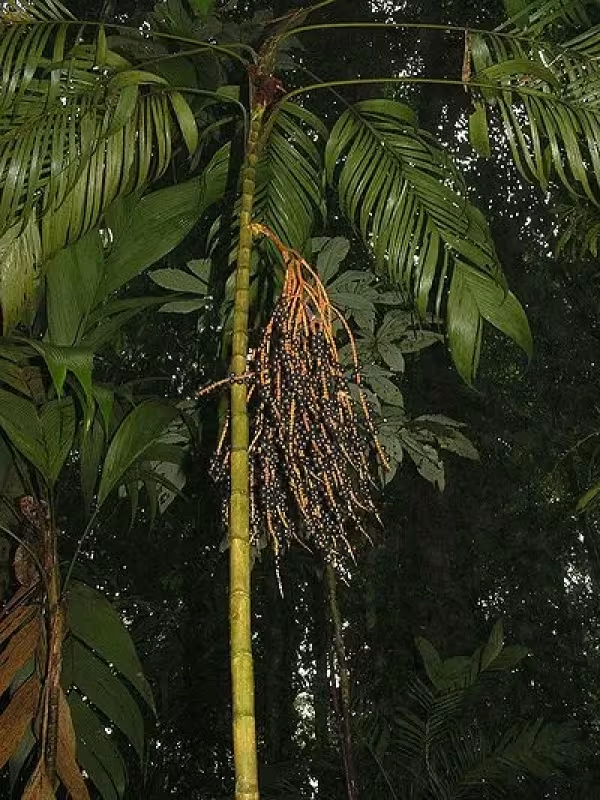
Description
Growing requirements
Geonoma deversa is a small, shade-loving palm belonging to the Arecaceae family, native to the lush tropical rainforests of Central and South America.
This species thrives in high humidity and requires a soil environment that mimics the forest floor: rich in organic matter, slightly acidic, and well-draining.
It is strictly a tropical plant, meaning it demands stable temperatures, typically between 20°C and 28°C, and cannot tolerate frost or significant temperature drops.
As an understory plant, it requires protection from direct sunlight, which can easily scorch its delicate, feathery leaves and hinder its physiological development.
Agrotechnical management includes maintaining moisture levels in the substrate, providing consistent hydration without waterlogging, and ensuring excellent air circulation around the crown.
Harvesting
The primary economic application of Geonoma deversa involves the harvesting of its leaves, which are highly prized by indigenous communities for creating durable and waterproof thatch roofs.
Harvesting strategies are based on the selective removal of mature leaves, ensuring that the plant's apical meristem, or growth point, remains completely intact.
Sustainable collection cycles are implemented to allow the palm to regenerate its foliage, supporting long-term productivity without harming the individual specimen.
After collection, the leaves are carefully inspected for pests or mechanical damage before being dried and bundled for transportation or immediate construction use.
While primarily a wild-harvested resource, the species is also valued in specialized ornamental horticulture for its elegant growth habit in conservatory settings.