
Large-flowered hemp-nettle
Galeopsis speciosa Mill.
Description
Sowing dates
The Large-flowered hemp-nettle (Galeopsis speciosa Mill.) belongs to the Lamiaceae family. It is widely recognized in agronomy as an aggressive annual broad-leaved weed that infests cereal and vegetable fields.
Originating from the temperate regions of Eurasia, this plant has adapted to diverse climatic zones. It is particularly common in areas with fertile soils and high moisture content, such as temperate forest zones.
The seeds germinate early in the season when soil temperatures reach 4-6°C. Its rapid development during the spring makes it a serious competitor for light and soil nutrients against early-sown crops.
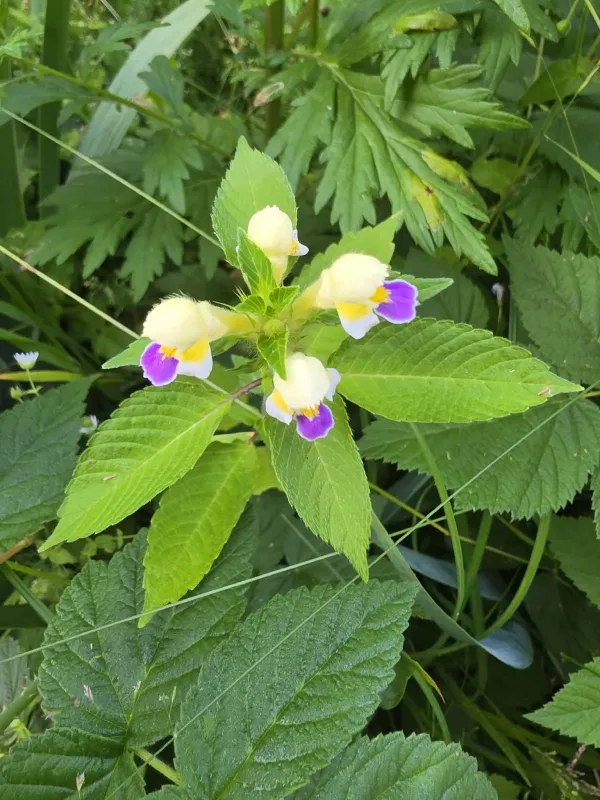
Botanically, it is characterized by an erect, branched stem and distinctive large yellow flowers with a purple throat, which makes them highly visible during the flowering stage in early summer.
It acts as a prolific seeder; a single mature plant can produce thousands of seeds, significantly increasing the soil seed bank and posing long-term challenges for crop rotation.
Growing requirements
Galeopsis speciosa prefers nutrient-rich, moist loamy or sandy soils. It thrives in slightly acidic environments, often becoming a dominant weed in fields with such soil characteristics.
The plant requires ample access to sunlight during its early growth stages; however, it can tolerate partial shading, allowing it to survive beneath the canopy of established crops.
Crop rotation serves as the primary method of management. Alternating spring crops with winter crops interrupts the life cycle of the weed and allows for seasonal mechanical control.
Effective soil preparation, including stale seedbed techniques, helps induce germination of the weed seeds before the main crop is sown, allowing for pre-emergent destruction.
Chemical control using systemic herbicides is most effective when the weed is in the rosette stage or early branching phase, ensuring the best penetration and result.
Main diseases and pests
As a weed, it serves as a host for various phytopathogens that can migrate to cash crops, leading to increased risk of disease outbreaks in the field.
While not heavily targeted by many pests, it can act as a refuge for certain insects that later migrate to crops like wheat or barley, requiring integrated pest management.
The physical presence of the plant during harvest interferes with machinery operations and causes contamination of the grain yield, which is costly to process and clean.
Prevention of seed maturation is essential to stop the infestation in the subsequent years, requiring timely intervention before the plant enters the reproductive phase.
- Powdery mildew
- Root rot pathogens
- Leaf spot diseases
- Various insect vectors