
Spotted Emu Bush
Eremophila maculata (Ker Gawl.) F. Muell.
Description
Growing requirements
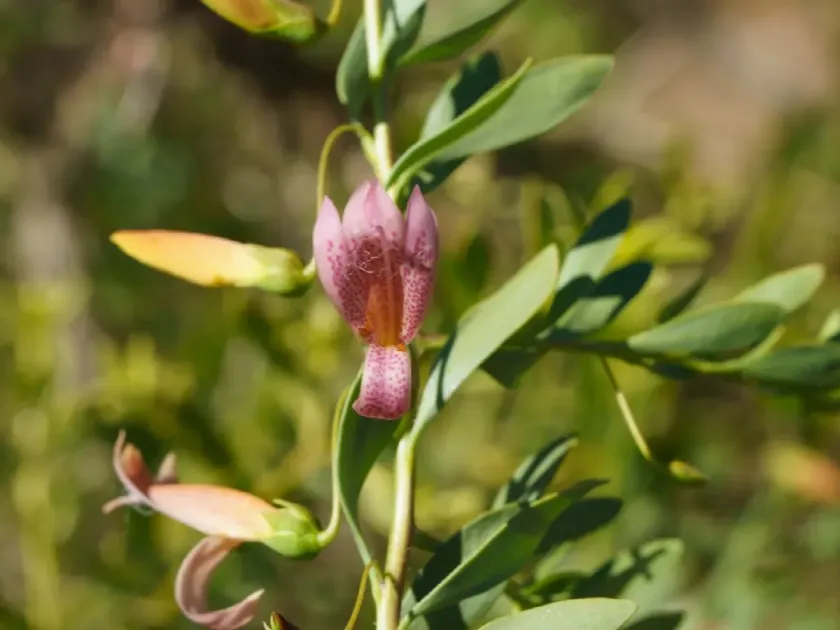
The Spotted Emu Bush (Eremophila maculata) is a member of the Scrophulariaceae family, originating from the arid regions of Australia. It is a resilient evergreen shrub that has evolved to thrive in environments with extreme heat and very low annual rainfall.
To cultivate Eremophila maculata successfully, one must ensure excellent soil drainage. The plant is highly susceptible to root rot, making heavy or water-retentive soils unsuitable for its growth. Sandy or rocky soils are ideal, reflecting its natural desert habitat.
Full sun exposure is an absolute requirement for this species. Providing adequate sunlight ensures a dense growth habit and vibrant flowering. When placed in shaded areas, the plant becomes leggy and loses the dense, attractive foliage for which it is cultivated in gardens.
In terms of agricultural management, Eremophila maculata requires very little fertilization. In fact, excessive nutrient levels, particularly phosphorus, can be detrimental to the plant's health, as it is adapted to nutrient-poor soils where it efficiently manages its resources.
Economically and ornamentally, the Spotted Emu Bush is widely used in xeriscaping and sustainable landscaping. Its high drought tolerance makes it a premier choice for water-wise gardening, erosion control, and serving as a low-maintenance hedge in arid climates.
Main diseases and pests
Root rot, primarily caused by Phytophthora species, stands as the most significant threat to the Spotted Emu Bush. This pathogen thrives in moist conditions, and its presence is almost always associated with poor irrigation management or inadequate drainage in the growing medium.
Scale insects and mealybugs can occasionally infest the stems and leaves, especially if the plants are maintained in protected environments with poor airflow. These pests weaken the plant by feeding on sap, often leading to secondary issues like sooty mold accumulation.
Aphids tend to colonize the succulent new growth during the flowering season. While rarely fatal, they can distort emerging buds and negatively impact the aesthetic quality of the shrub, necessitating periodic checks during the peak blooming phase.
Improper pruning techniques can introduce infections to the plant. It is essential to use sanitized tools when trimming dead or damaged wood to prevent the spread of opportunistic fungal pathogens that enter through open wounds.
Maintaining adequate space between individual shrubs is critical to ensure proper air circulation. Stagnant air around the canopy creates a microclimate that encourages leaf-spotting fungi, which can reduce the overall health and vigor of the Eremophila colony.