
Eremophila nivea
Eremophila nivea Chinnock
Description
Growing requirements
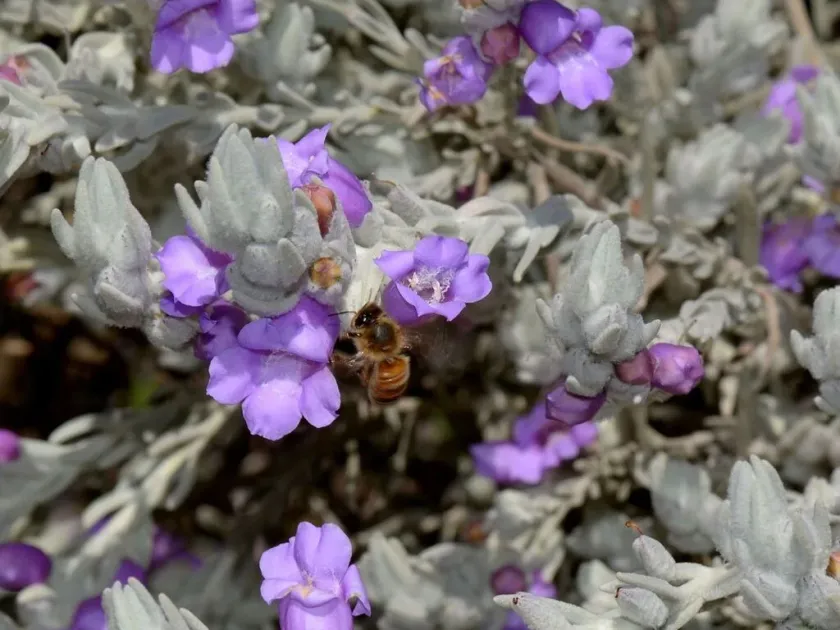
Eremophila nivea, commonly known as Snow Eremophila, is a perennial shrub belonging to the family Scrophulariaceae. Native to the arid regions of Western Australia, this species is highly valued for its striking silver-grey foliage and showy purple flowers.
The plant thrives in Mediterranean-like climates where sunlight is abundant and rainfall is minimal. It is considered an excellent candidate for xeriscaping, as it requires very little maintenance once the root system is well-established.
Success in cultivation depends on the soil structure, which must be gritty, fast-draining, and low in organic matter. Heavy clay soils are unsuitable and often lead to rapid decline due to root suffocation.
Proper agricultural practices include deep but infrequent watering, ensuring the soil dries out completely between irrigation cycles to mimic the natural fluctuations of the Australian desert.
This shrub serves primarily as an ornamental plant. Due to its aesthetic appeal, it is widely utilized in botanical gardens and modern xeriscape projects, where it provides a high-contrast visual element.
Main diseases and pests
The primary threat to the longevity of Eremophila nivea is fungal root rot caused by excessive soil moisture and poor drainage. This condition is often fatal and difficult to treat once symptoms appear on the foliage.
Pests such as spider mites and mealybugs can occasionally infest the plants, particularly in glasshouse conditions where air circulation is restricted.
Good management requires consistent monitoring for early signs of infestation. Integrated pest management strategies should prioritize physical removal or gentle horticultural soaps over systemic chemicals.
Ensuring optimal airflow around the plant is the best preventative measure against most pathogens. Pruning should be performed selectively to allow light and air to reach the inner structure of the bush.
Gardeners must avoid heavy overhead watering, as wet foliage combined with high humidity increases the susceptibility of the plant to fungal infections that ruin the aesthetic of the silvery hairs.