
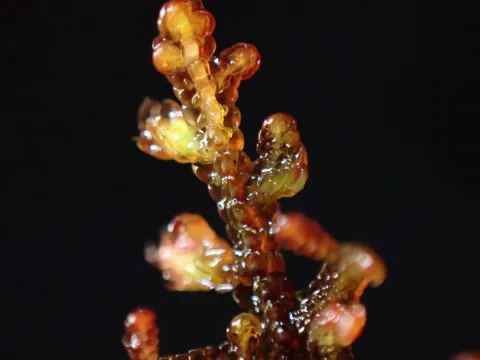
Frullania
Frullania
Frullania is a genus of liverworts belonging to the family Frullaniaceae. While it is not considered an agricultural crop, it is a crucial component of forest ecosystems, often serving as a significant biological indicator for researchers and botanists worldwide.
What the section contains


Frullania
These plants are primarily epiphytic, frequently found growing on the bark of trees, as well as on damp rocks. They thrive in environments with consistently high atmospheric humidity, which is essential for their metabolic processes and vegetative propagation.
Botanically, Frullania is characterized by a complex structure, including specialized leaf lobules that function as water-retaining structures. These small, helmet-shaped organs are a diagnostic feature that helps the moss manage water availability in its specific niche.
Cultivation, when practiced in experimental or conservation settings, requires specific moisture management, indirect light, and a substrate that mimics the acidity and texture of tree bark. Environmental control is strict, as these plants are highly sensitive to external variables.
The economic and ecological utility of Frullania primarily lies in environmental monitoring. By observing the presence and health of these mosses, ecologists can determine the level of air pollution and the overall health of woodland habitats in different regions.
The most significant threats to Frullania populations include atmospheric pollution, particularly sulfur dioxide and heavy metals. Being highly sensitive organisms, these mosses react quickly to poor air quality, which can lead to the decline of entire local colonies.
Climate change, manifesting as prolonged droughts, poses a severe threat to moisture-dependent species. A lack of consistent hydration leads to the desiccation of the plant tissue, which restricts its growth and ability to release reproductive spores.
Habitat destruction, such as deforestation and the removal of old-growth trees, is a primary driver of population loss. Without suitable bark surfaces, the moss loses its primary anchor point and source of nutrients absorbed from the humid air.
Invasive lichen species and faster-growing bryophytes can outcompete Frullania for space and light when environmental conditions shift. This shifts the balance of the ecosystem and can reduce the diversity of the local bryophyte flora over time.
While specific insect pests are not the primary cause of damage, fungal pathogens can develop in poorly ventilated or excessively stagnant environments. Monitoring the health of these colonies is essential for identifying early warning signs of ecosystem degradation.