
Frullania dilatata
Frullania dilatata
Description
Growing requirements
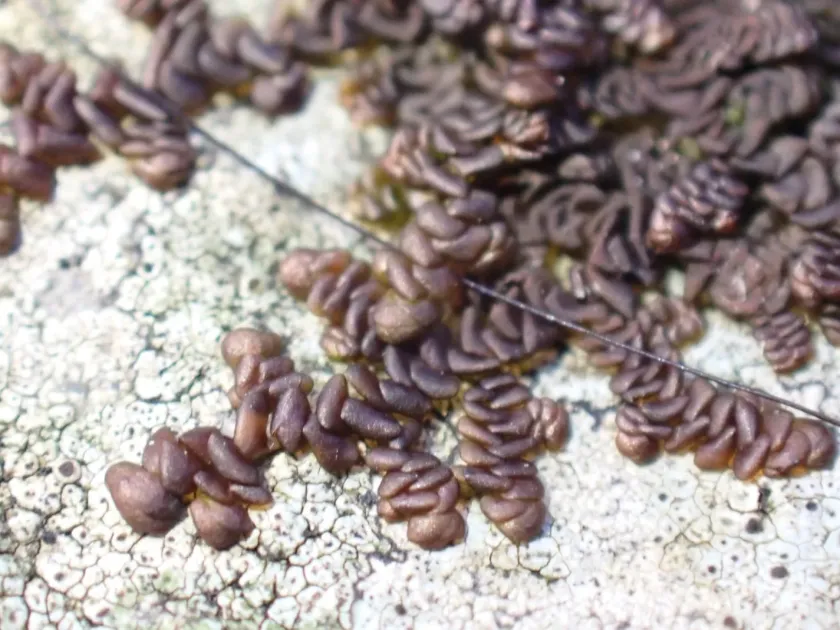
Frullania dilatata is a common liverwort species belonging to the Frullaniaceae family. It is an epiphytic plant that grows predominantly on the bark of deciduous trees, forming dense, dark-colored mats.
While this plant is not a commercial agricultural crop, it is a significant organism in forest management and environmental science. It is widely recognized as a valuable bioindicator for air quality and forest microclimate health.
The plant requires environments with stable high humidity and moderate light. It is commonly found on the trunks of trees such as oak, ash, and alder, where it can firmly attach to the bark surface using its rhizoids.
Botanically, it features unique leaves composed of a large lobe and a smaller, saccate lobule. This structural adaptation is essential for water storage, allowing the liverwort to withstand temporary drought conditions.
The distribution of this species is largely determined by climatic conditions, favoring areas with mild winters and consistent moisture levels. It thrives in well-preserved, mature forest habitats where its substrate remains undisturbed.
Main diseases and pests
The primary threat to Frullania dilatata is the loss of suitable habitats due to deforestation. The removal of mature trees with textured bark directly eliminates the niche required for the plant to thrive.
Atmospheric pollution, particularly sulfur dioxide, is highly detrimental to the species. As a sensitive bioindicator, it suffers physiological damage and declines rapidly in polluted environments.
Changes in forest microclimate, such as reduced humidity due to forest thinning or drainage, create unsuitable conditions. The plant is heavily dependent on ambient moisture, making it vulnerable to drying effects.
Inter-species competition from fast-growing lichens and other bryophytes can restrict the growth of Frullania dilatata if the environmental balance shifts.
There are no significant agricultural pests associated with this plant, as it is not a commercial crop. Potential damage to colonies is mostly abiotic, resulting from extreme climate fluctuations or direct toxic exposure from pollution.