
Knotted club-rush
Ficinia nodosa
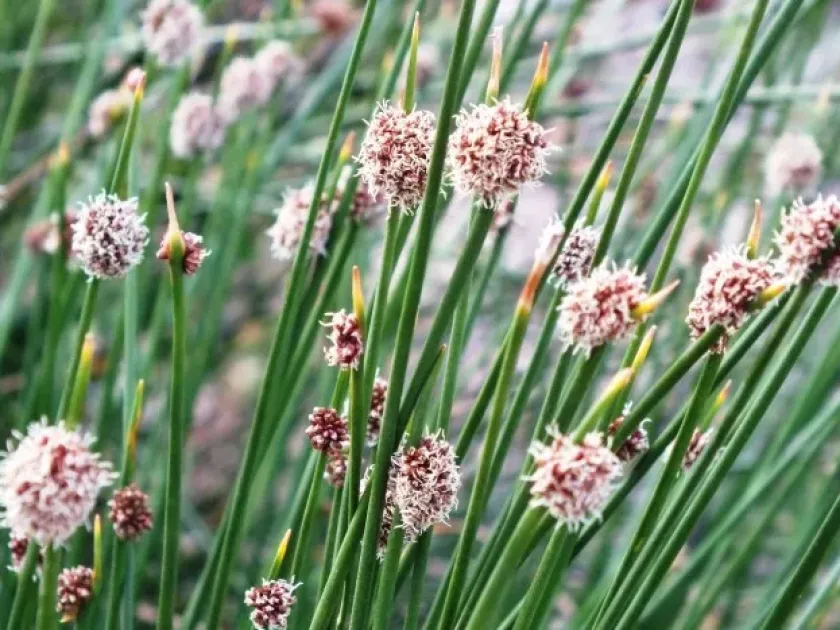
Description
Growing requirements
Ficinia nodosa, commonly known as the Knotted club-rush, is a robust perennial herb belonging to the Cyperaceae family. It is native to the coastal regions of Australia and New Zealand, where it plays a critical role in maritime ecosystem stabilization.
Botanically, the plant is characterized by its stiff, cylindrical, rush-like leaves that emerge from a vigorous underground rhizome system. These rhizomes allow the plant to spread effectively, forming dense mats that are highly efficient at trapping sand and soil particles.
The culture thrives in full sun and is remarkably tolerant of saline conditions, including direct salt spray. It prefers sandy or well-drained loamy soils, making it an ideal candidate for revegetation projects in harsh coastal environments where other species fail.
In terms of agricultural management, Ficinia nodosa requires minimal input. It is highly drought-tolerant once established and does not necessitate regular fertilization, as it is well-adapted to low-nutrient environments found in dunes and coastal scrublands.
Its primary agricultural and ecological value lies in soil conservation. By stabilizing shifting sands, it prevents erosion and protects infrastructure or agricultural lands located near the coast from the encroachment of moving dunes.
Main diseases and pests
Ficinia nodosa is notable for its exceptional resistance to common pests and diseases that affect typical field crops. Due to its unique chemical profile and tough foliage, it is rarely impacted by insects, making it a sustainable choice for landscaping.
The most significant threat to the health of this species is poor drainage. If grown in heavy, waterlogged soils, the root system is highly susceptible to rot, which can result in significant loss of stand density and total plant decline.
Fungal issues may arise in conditions of high humidity or lack of airflow if the plants are placed too closely together. Proper spacing during the sowing or planting phase is essential to maintain the health and structural integrity of the crop.
Weed management is mainly required during the early stages of establishment. Once the plant has formed a dense colony, it becomes highly competitive and naturally suppresses the growth of invasive species within its immediate range.
Overall, maintenance involves ensuring the site conditions mimic its natural environment. With proper drainage and adequate exposure to natural elements, the Knotted club-rush remains a low-maintenance, resilient plant with a long lifespan.