
European beech
Fagus sylvatica L.
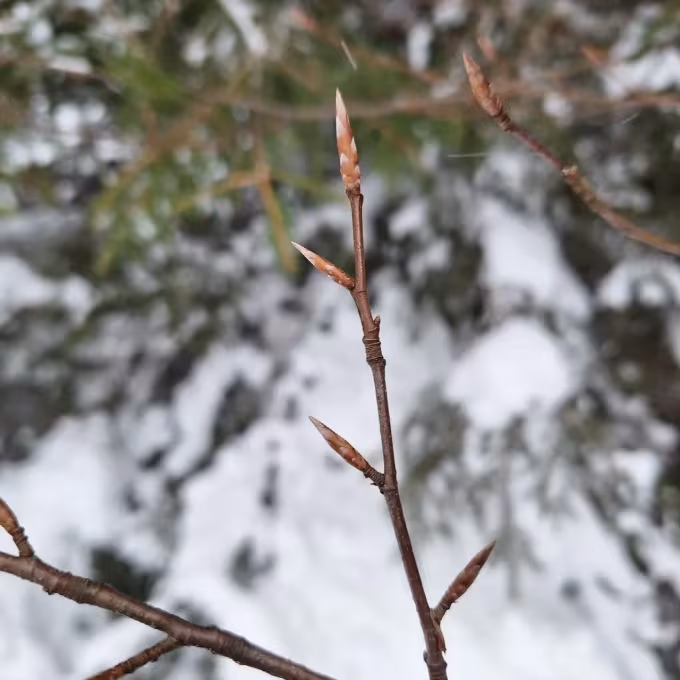
Description
Sowing dates
European beech (Fagus sylvatica L.) belongs to the Fagaceae family. It is a long-lived deciduous tree species propagated primarily through seeds, which require specific conditions for germination and survival.
Seeds (beechnuts) are typically collected in autumn when they turn brown. Since they are dormant, cold stratification is necessary to break dormancy and ensure uniform germination in the following spring.
In nursery settings, seeds are sown in autumn or early spring at a depth of 3–5 cm. The seedbed must be kept moist and protected from rodents, which are major predators of beech seeds.
Seedlings are usually grown in nurseries for 2 to 3 years. This period allows them to develop a robust root system and reach a height suitable for outplanting into permanent forest or plantation sites.
Transplanting is best performed during the dormant season, specifically in early spring. Proper site preparation, including weed control, is essential for the successful establishment of young beech trees.
Growing requirements
The species is highly shade-tolerant, making it an excellent candidate for understory regeneration. However, to achieve maximum growth and wood quality, it prefers sites with moderate sunlight exposure.
Beech trees require fertile, deep, well-drained soils. They thrive best in calcareous or slightly acidic loam soils and are particularly sensitive to waterlogging, which can cause root decay.
Climate is a limiting factor for this species; it favors regions with oceanic or temperate climates characterized by cool summers and mild winters. It is sensitive to late spring frosts.
Humidity is crucial for European beech. It requires high atmospheric moisture and consistent rainfall, as it is highly susceptible to drought stress, which can lead to canopy thinning and death.
Mycorrhizal fungi are essential for the healthy development of beech trees. These symbiotic associations help the roots absorb minerals, especially in nutrient-poor forest soils.
Yield
Productivity in beech stands is measured by total wood volume and timber quality. Due to its long rotation period, beech is often managed in sustainable cycles lasting over 100 years.
Harvesting for high-quality timber usually occurs when trees reach their economic maturity, typically between 80 and 120 years of age, ensuring the stem has sufficient diameter and lacks knots.
The wood of Fagus sylvatica is dense, hard, and has excellent bending properties, making it highly valued in furniture manufacturing, flooring, veneer production, and musical instruments.
Beyond timber, beech stands provide ecosystem services, such as carbon sequestration and wildlife habitat, which are increasingly important in modern sustainable forest management practices.
Beechnuts are an important food source for forest fauna, including wild boars and birds, contributing significantly to the biodiversity of the ecosystem where they are cultivated.
Main diseases and pests
One of the most destructive threats to beech forests is the beech bark disease, a complex caused by the combination of a scale insect and specific fungal pathogens that weaken the tree.
Insects such as the beech leaf miner and various wood-boring beetles can cause significant aesthetic and structural damage, particularly in stands that are already stressed or improperly managed.
Wildlife damage is a critical issue for young plantations. Deer and other ungulates often browse on young shoots and strip bark, which can stunt tree growth or allow secondary infections.
Drought-induced stress is a growing concern due to changing climate patterns. Trees weakened by lack of water become more prone to fungal infections and secondary pests.
- Beech bark disease (Nectria galligena)
- Beech scale (Cryptococcus fagisuga)
- Powdery mildew
- Root rot (Phytophthora spp.)