
Oriental beech
Fagus orientalis Lipsky
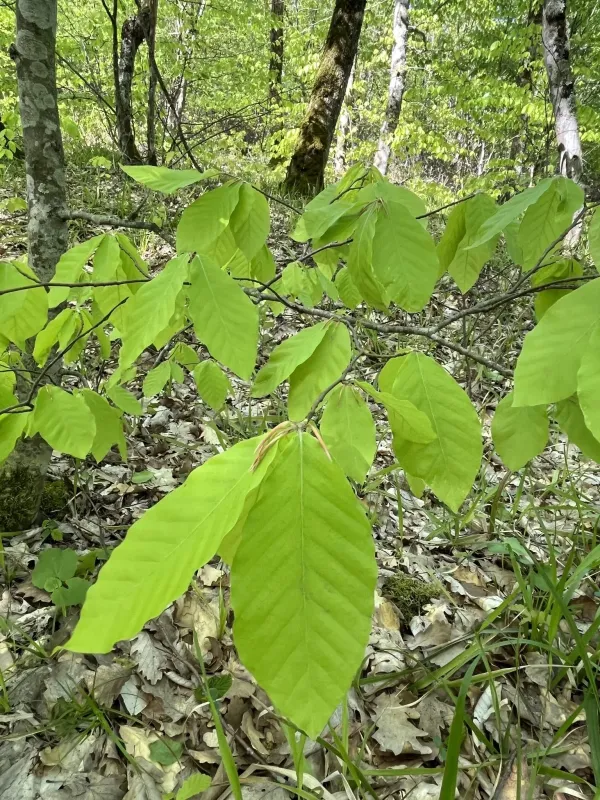
Description
Sowing dates
Oriental beech is typically propagated through seeds, known as beech mast. Sowing is usually carried out in autumn or after a period of stratification to overcome dormancy before spring planting.
For optimal results, seeds should be sown in well-prepared nursery beds at a depth of 3–5 cm. Consistent soil moisture is critical during the initial germination phase to ensure a high success rate.
Seedlings develop a substantial taproot early on, making careful management of nursery soil density essential to facilitate future transplantation without damaging the root system.
During the first few years, young plants prefer semi-shaded environments. Overexposure to direct sunlight can cause leaf scorch and stunt the development of the delicate young saplings.
Transplanting to the final site is best conducted when the trees are dormant, typically in early spring, allowing them to establish their roots before the onset of the summer heat.
Growing requirements
The Oriental beech belongs to the Fagaceae family and requires deep, nutrient-rich, and well-drained soils. It thrives in locations where there is minimal risk of waterlogging.
This species prefers a temperate climate with high humidity and mild winters. It is highly sensitive to extreme frost and drought, which can significantly inhibit growth and overall vigor.
As a shade-tolerant species, it performs well under the forest canopy but requires adequate spacing to develop a healthy crown as it matures into a large, dominant forest tree.
Proper aeration of the soil is vital for the health of the roots. Heavy or compacted soils often lead to poor growth and increased susceptibility to various physiological stressors.
In silvicultural practice, site selection based on topography is crucial; north-facing slopes often provide the ideal balance of moisture and protection from excessive heat.
Yield
The primary economic focus of Oriental beech is its high-quality timber. The rotation age for forest harvesting typically ranges from 80 to 120 years, depending on site productivity.
Beech wood is prized for its hardness, density, and uniformity. It is extensively utilized in furniture manufacturing, flooring, veneer production, and high-quality tool handles.
Due to its working properties, beech wood is highly sought after for steam-bending, making it a preferred material for chairs and other complex furniture designs.
Beyond timber, the species plays a significant role in landscape restoration and carbon sequestration, contributing to the overall ecological balance of managed woodland areas.
The nuts (mast) of the beech tree serve as an important food source for various forest wildlife, which indirectly contributes to the biodiversity of the managed forest ecosystems.
Main diseases and pests
The most severe threats to Oriental beech include fungal infections such as bark cankers and root rot, which are often exacerbated by drought stress or physical tree damage.
Insects like leaf-eating beetles and caterpillars can cause significant defoliation, particularly in younger stands, reducing the tree's photosynthetic capacity and annual growth increment.
Mechanical damage to the bark by forestry equipment creates entry points for pathogens, emphasizing the need for careful management practices during thinning operations.
Climate change, specifically rising temperatures and unpredictable rainfall, poses a long-term threat to the health of beech forests by increasing the prevalence of wood-boring pests.
- Beech bark disease and cankers
- Defoliating insect larvae
- Armillaria root rot
- Wood-boring beetles