
Fadogia monticola
Fadogia monticola
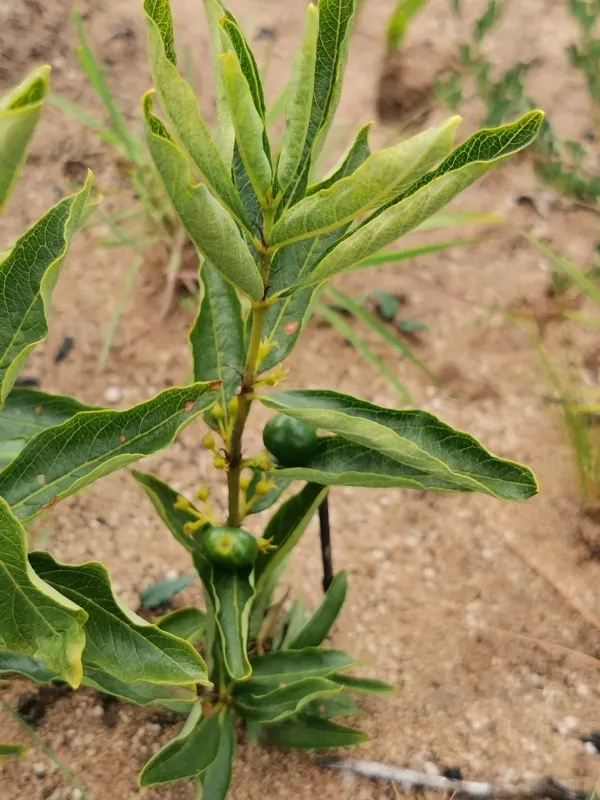
Description
Sowing dates
Fadogia monticola is a member of the Rubiaceae family, characterized as a perennial shrub or subshrub. It is naturally adapted to specific ecological niches in its native African habitat.
Propagation typically relies on seeds that require a well-draining, nutrient-rich substrate. Germination is successful when temperatures remain consistently warm, ideally between 22 and 26 degrees Celsius.
The sowing process in an agricultural setting usually takes place in greenhouses. Seeds are sown at a shallow depth to ensure they receive enough warmth and light to trigger initial physiological processes.
Seedlings need to be transplanted carefully as they develop their root systems. Maintaining consistent moisture without saturation is key to healthy development in the early growth stages.
Techniques for managing the crop include regular spacing to ensure adequate airflow between plants. This practice helps prevent moisture build-up and promotes uniform development of the foliage.
Growing requirements
This species requires a tropical to subtropical climate to thrive. It is highly sensitive to frost and extreme cold, necessitating climate-controlled environments in non-tropical regions.
The ideal soil profile is sandy loam or volcanic soil, which provides the necessary drainage. Poorly drained, heavy clay soils are detrimental to the plant's long-term health.
Water requirements fluctuate with the seasonal cycle of the plant. During the active growing period, steady irrigation is necessary to support biomass accumulation.
Nutrient management involves applying potassium and phosphorus-rich fertilizers. Excessive nitrogen should be avoided to prevent leggy growth and to ensure the plant directs energy towards secondary metabolite production.
Light intensity plays a significant role in the plant's development. While it needs bright light, protection from harsh, direct sunlight during peak noon hours is recommended to avoid leaf scorching.
Main diseases and pests
Fadogia monticola can be susceptible to common soil-borne pathogens if drainage is inadequate. Root rot is a significant risk in waterlogged soil conditions.
Pest infestations, particularly by aphids or spider mites, can occur in indoor or greenhouse settings. Regular monitoring of the underside of leaves is recommended for early detection.
Fungal diseases like mildew may appear in conditions of high humidity combined with poor air circulation. Proper spacing of the plants is the most effective preventative measure.
In some regions, general agricultural pests can cause leaf damage, requiring integrated pest management strategies. Chemical control should be used as a last resort.
Prevention is the main strategy for crop protection. Maintaining plant vigor through optimal nutrition and environmental stability is the best defense against major biological threats.
Harvesting
Harvesting is focused on the aerial parts of the plant, which are known to contain bioactive compounds. The timing of the harvest is critical and is based on the plant's developmental stage.
Manual harvesting techniques are typically employed to prevent damage to the delicate stems. Care must be taken to maintain the cleanliness of the material harvested.
Immediate post-harvest processing involves cleaning the stems of soil and debris. This initial cleanup is vital for maintaining the quality of the raw botanical product.
Drying must be performed in a temperature-controlled, shaded environment with constant airflow. This ensures the stabilization of the compounds contained within the plant tissues.
Storage of the dried crop requires moisture-proof and light-resistant containers. Proper storage conditions are essential for preserving the efficacy of the plant material over time.