
Pichi
Fabiana imbricata
Description
Growing requirements
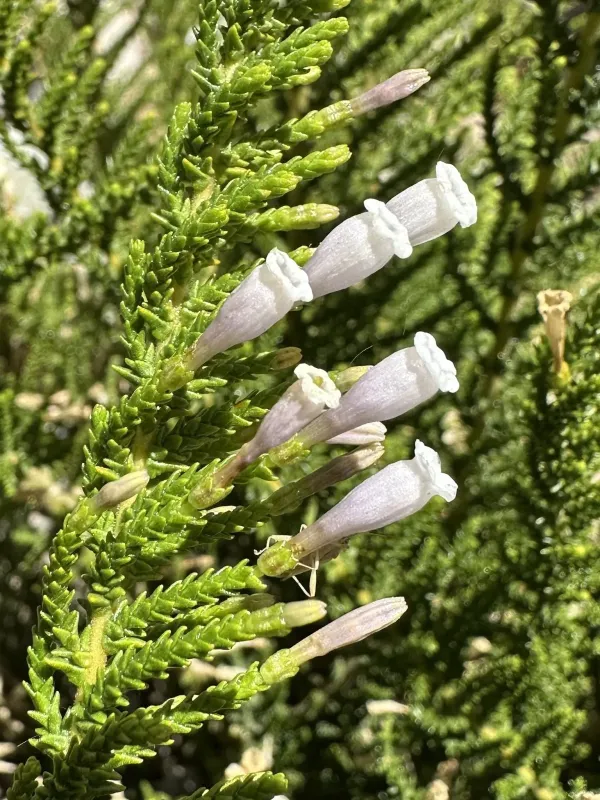
Fabiana imbricata, commonly known as Pichi, is an evergreen shrub belonging to the Solanaceae family. Despite its taxonomic classification, it is characterized by scale-like leaves that give it a superficial appearance resembling a conifer, distinguishing it from other members of the nightshade family.
The plant is native to the arid and rocky regions of South America, primarily within the landscapes of Chile and Argentina. It has evolved to thrive in environments with significant drainage, making it particularly well-suited to steep slopes and stony soils where other species might struggle.
In terms of agricultural requirements, Pichi demands full sun exposure and well-aerated, sandy-loam soil. The root system is notoriously sensitive to waterlogging, which necessitates careful site selection and the installation of effective drainage systems to prevent long-term damage to the crop.
Regarding climate, the plant prefers temperate conditions with mild winters. While it shows some tolerance to temporary dry spells, extreme temperature fluctuations can hinder growth. It is generally recommended for cultivation in Mediterranean-style climates to ensure consistent metabolic activity throughout the growing season.
The economic value of Fabiana imbricata lies largely in its medicinal properties. The stems and leaves contain active compounds, such as fabianine, which are extracted for diuretic and choleretic applications in phytotherapy. Industrial cultivation focuses on harvesting these biomass components during the peak flowering stage.
Main diseases and pests
Root rot is the primary physiological threat to Pichi plantations, usually induced by poor drainage or excessive irrigation practices. To mitigate this risk, agronomists recommend maintaining a dry soil surface and providing adequate spacing between plants to encourage airflow.
Insect pests, specifically aphids and certain mite species, may sporadically affect the plant, especially under greenhouse conditions. Maintaining a balanced ecosystem and utilizing biological control agents are the preferred methods for protecting the shrub while ensuring the purity of the medicinal product.