
Eutrema parvulum
Eutrema parvulum
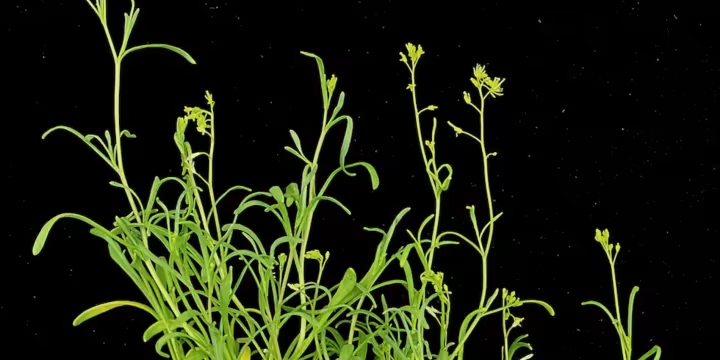
Description
Growing requirements
Eutrema parvulum is a rare herbaceous plant belonging to the Brassicaceae family. In the wild, it thrives in specific ecological niches, typically preferring moderately cold and humid environments found in alpine or northern regions.
This species is characterized by high adaptability to extreme conditions, including freezing temperatures and stony, nutrient-poor substrates. The plant has evolved a biological strategy suited for a short growing season.
Proper drainage is critical for successful cultivation. Eutrema parvulum does not tolerate waterlogging, so the growing medium must be light, sandy, or rocky, maintaining a neutral to slightly acidic pH level.
Ideal humidity levels for this plant range between 60-70%. It is highly sensitive to soil overheating, making mulch application around the root zone essential to maintain a cool soil temperature in intensive farming scenarios.
Light is a decisive development factor for this species. It prefers well-lit locations but requires partial shading during peak sunlight hours in regions with hot summers to avoid leaf scorch.
Yield
Economic use of this culture is limited by its botanical niche. Eutrema parvulum is primarily considered a specialty crop or a valuable genetic resource for breeding programs aiming to enhance hardiness in related Brassicaceae crops.
The biochemical composition includes unique glucosinolates common to the Brassicaceae family. This profile makes it a subject of interest for the pharmaceutical industry and functional food research.
Yields of biomass or seeds are not currently regulated at a commercial scale, as this is not a mainstream agricultural crop. Efforts are focused on conservation and understanding its reproductive capacity.
When grown in controlled environments or greenhouses, biomass accumulation is relatively slow, reflecting its evolutionary survival strategy. Propagation efficiency depends significantly on successful seed stratification.
The potential of this culture lies in its use as a model organism for studying plant adaptation mechanisms under various environmental stressors, including cold and nutrient deficiency.
Main diseases and pests
Common diseases affecting this species include fungal infections that thrive in high humidity, such as powdery mildew and various types of root rot, which can be devastating if air circulation is poor.
Pests that threaten Eutrema parvulum are similar to those of other cruciferous plants. Specifically, flea beetles are known to cause significant damage to young seedlings during their early growth stages.
Leaf-eating insects and cutworm larvae also pose a risk during the active vegetation period. Biological control methods are recommended to manage pest populations without damaging the plant's sensitivity.
Nematode infestation is a possible risk if crop rotation is not practiced and the plant is grown in the same location over multiple seasons. Regular monitoring of the root system is an essential part of care.
Disease prevention involves maintaining adequate spacing between individual plants, which ensures proper airflow and significantly reduces the establishment of harmful pathogenic microorganisms.