
Joe-Pye weed
Eupatorium fistulosum Barratt
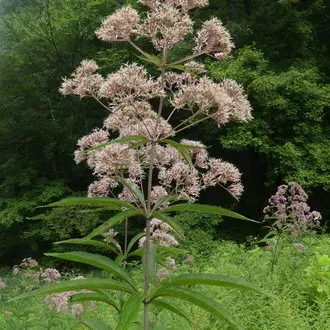
Description
Sowing dates
Joe-Pye weed is best propagated via seeds or division. Seeds require a period of cold stratification to break dormancy, so sowing them in late autumn or early spring is recommended to mimic natural seasonal cycles.
If starting seeds indoors, place them in the refrigerator for a month before sowing in high-quality seed-starting mix. Keep the soil consistently moist until germination occurs, which typically takes a few weeks.
For vegetative propagation, divide established clumps in spring or autumn. Ensure each division contains several healthy crown buds to support vigorous growth in the following season.
When transplanting to the garden, space the plants at least 2 to 3 feet apart. This spacing allows for proper air circulation, which is essential to prevent foliage issues and promotes the development of strong, tall stems.
Immediate irrigation after planting is crucial for establishment. Mulching around the base helps retain soil moisture and prevents weeds from competing with the young root systems.
Growing requirements
As a member of the Asteraceae family, Eupatorium fistulosum thrives in fertile, moisture-retentive soils. It is naturally found in meadows and moist thickets, preferring conditions that do not dry out completely during the summer.
The plant performs best in full sun, though it can tolerate partial shade. In sunnier locations, the plants will produce more robust growth and longer-lasting, more vibrant flower heads throughout the late summer.
Water requirements are significant; Joe-Pye weed should never be allowed to experience prolonged drought. During extreme heat, irrigation should be increased to maintain foliage turgidity and overall plant health.
Soil quality should be enriched with compost or organic matter to maintain fertility and structure. The plant prefers a neutral to slightly acidic pH, which optimizes nutrient uptake in most environments.
This species is highly hardy and generally survives harsh winters without protection. In late autumn, the stems should be cut back to the ground level, allowing the plant to go dormant before new growth emerges in the spring.
Main diseases and pests
Joe-Pye weed is generally resistant to most common garden pests, but it may occasionally be affected by powdery mildew. This fungal disease is often a result of high humidity and poor airflow between crowded plants.
Aphids can sometimes infest the succulent growing tips of the stems, causing minor distortion. A simple spray of insecticidal soap or a strong blast of water is usually sufficient to manage minor infestations.
Root rot can occur if the site is poorly drained and remains waterlogged for extended periods. Selecting a location with adequate drainage or amending heavy clay soils can effectively mitigate this risk.
Slugs and snails may browse on new spring growth, particularly in damp garden environments. Using organic barriers like crushed eggshells or iron phosphate pellets can protect vulnerable shoots.
Maintaining good plant hygiene, such as removing fallen leaves at the end of the season and thinning overly dense clumps, is the most effective way to prevent the buildup of pathogens and pests.