
Eucrosia
Eucrosia hybrids
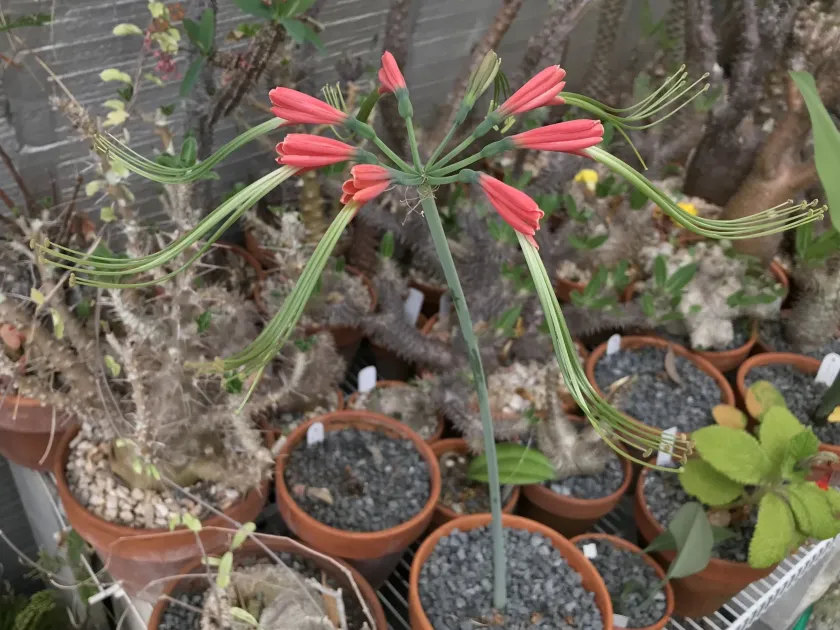
Description
Growing requirements
Eucrosia is a genus of flowering plants in the family Amaryllidaceae, native to the mountainous regions of South America, particularly Ecuador and Peru. These plants are highly regarded in horticulture for their unique, strap-like petals and prominent, long stamens.
Cultivation requires a well-draining, nutrient-rich soil mix. A mixture consisting of peat, perlite, and coarse sand is ideal to prevent waterlogging, which is the primary cause of bulb rot. Containers should always have adequate drainage holes at the bottom.
Eucrosia prefers bright, indirect sunlight to thrive. Exposure to intense, direct afternoon sun can cause leaf scorch, while insufficient light will lead to weak growth and failure to bloom. An east-facing or lightly shaded south-facing window is usually optimal.
The plant follows a distinct seasonal cycle. During the growing season, moderate irrigation and regular fertilization are necessary. Once the foliage begins to yellow after flowering, the plant enters a dormant phase where water should be significantly reduced or withheld.
Temperature management is critical. During the active growing period, temperatures between +20 and +25 degrees Celsius are preferred. During winter dormancy, the bulbs should be kept in a cooler environment, ideally around +10 to +15 degrees Celsius, to ensure a successful rest period.
Main diseases and pests
The most common disease affecting Eucrosia is fungal bulb rot, typically caused by overwatering or poor soil drainage. Maintaining a proper watering schedule and using sterile, well-draining substrates are the most effective preventative measures against this issue.
Pests such as mealybugs can pose a serious threat, as they congregate in the leaf axils and suck plant sap. Manual removal combined with the use of systemic insecticides is necessary to manage heavy infestations effectively.
Spider mites are a frequent problem in indoor environments, especially when air humidity is low. Regularly misting the plant or using a humidifier helps create conditions that are less favorable for these pests, reducing the risk of an outbreak.
Scale insects can also colonize the plant, appearing as small, brownish bumps on the stems and leaves. If not treated early, they can significantly weaken the plant's vigor and promote the growth of sooty mold on the foliage due to honeydew secretion.
Root-knot nematodes may occasionally affect the root system, leading to stunted growth. To avoid this, always use fresh, pasteurized soil and ensure that new bulbs are inspected for signs of damage or unusual swelling before planting them in the collection.