
Woolly sunflower
Eriophyllum lanatum
Description
Growing requirements
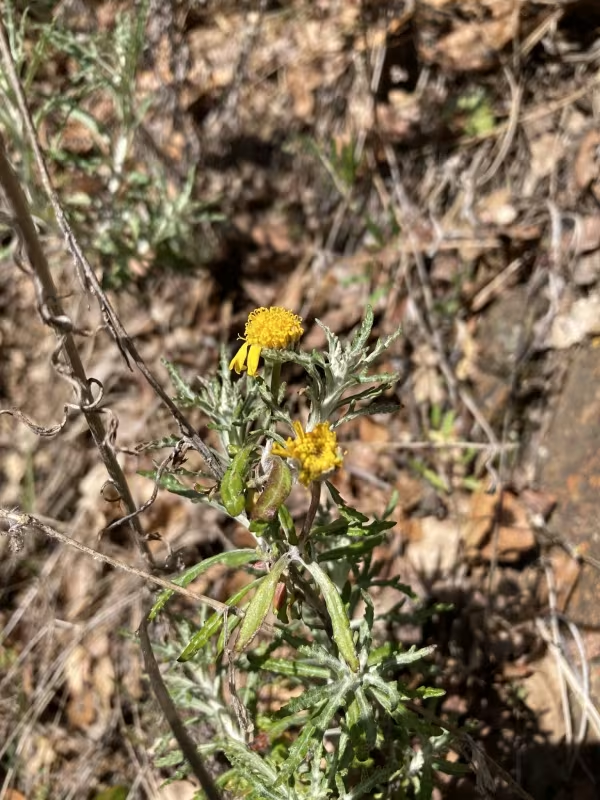
Eriophyllum lanatum, commonly known as the woolly sunflower, is a hardy perennial belonging to the Asteraceae family. It is native to western North America, where it thrives in diverse environments ranging from open woodlands to rocky, well-drained slopes.
The plant is defined by its characteristic dense, woolly hairs covering the leaves and stems, which provide a significant evolutionary advantage in water retention and temperature regulation during extreme drought conditions.
Agricultural success depends on providing full sun exposure and excellent soil drainage. While the species is highly adaptable, it fails in heavy, waterlogged clay soils, which promote root rot and lead to rapid decline in plant health.
In terms of management, the crop requires minimal fertilization, as it is naturally adapted to nutrient-poor soils. Over-fertilization often results in elongated stems and diminished flowering intensity, which reduces the plant's ornamental and ecological value.
The woolly sunflower is highly valued in xeriscaping and sustainable land management for its ability to stabilize loose soils and support local pollinator populations, particularly native bees and specialized butterflies.
Main diseases and pests
The primary threats to Eriophyllum lanatum are soil-borne pathogens and moisture-related fungal diseases. Root rot is the most common issue, occurring when drainage systems are inadequate during the dormant or winter season.
Foliar diseases such as powdery mildew may appear in environments with high humidity and poor air circulation. While rarely devastating, maintaining space between individual plants is the most effective management strategy for keeping the crop healthy.