
Yerba Santa
Eriodictyon californicum
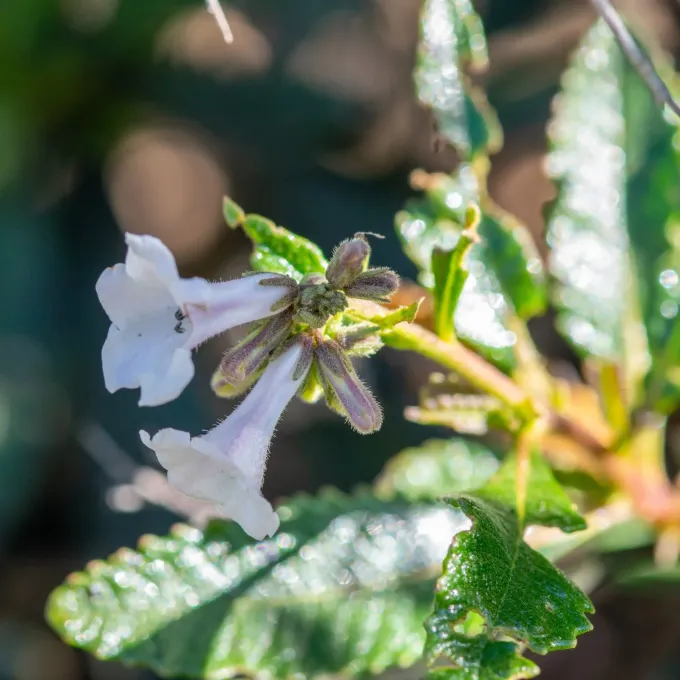
Description
Growing requirements
Eriodictyon californicum, commonly known as Yerba Santa, is an evergreen shrub belonging to the Boraginaceae family. It is native to the dry hills and mountainous regions of California and Oregon, where it thrives in well-drained, nutrient-poor soil.
The plant is highly drought-tolerant, making it an excellent candidate for low-water agricultural systems. Its leaves are coated in a distinctive sticky, resinous substance that helps the plant retain moisture and protects it from intense solar radiation.
For successful cultivation, the soil should be sandy or gravelly, ensuring excellent drainage. Any water-logging will inevitably lead to root rot, which is the primary cause of plant failure in garden settings. It prefers full sun exposure to maintain its vigorous growth.
Eriodictyon californicum exhibits significant resilience, including the ability to regenerate quickly after wildfires, which is a key feature of its native chaparral ecosystem. It requires minimal fertilization and performs best when allowed to establish a deep root system.
In terms of climate, it flourishes in regions with Mediterranean-type weather patterns. While it is hardy, young plants may need protection during extreme cold snaps, whereas mature shrubs are generally robust and can handle varying temperature fluctuations.
Harvesting
Harvesting Yerba Santa primarily involves gathering the leaves, which are rich in therapeutic resins and polyphenols. The harvest window typically occurs during the peak of the flowering season, when the plant's essential compounds are at their highest concentration.
Leaves are hand-picked with care to avoid damaging the woody structure of the shrub. Once harvested, the material must be dried in a cool, well-ventilated area to preserve the integrity of the resins, which are essential for its medicinal quality.
The pharmaceutical industry utilizes Eriodictyon for its potent expectorant and anti-inflammatory properties. Extracts are often prepared to treat respiratory conditions, coughs, and as a natural remedy for congestion and inflammation.
Beyond medicinal use, the unique chemical profile of the resin is of interest for sustainable cosmetic and flavoring applications. The leaves are known for their sweet, aromatic flavor, which masks the bitter taste of other herbal supplements.
Sustainable production practices include rotational harvesting and careful pruning. By removing older branches, growers encourage the production of fresh, high-quality foliage, ensuring a consistent and productive harvest for many years to come.