
Oriental false wheatgrass
Eremopyrum orientale
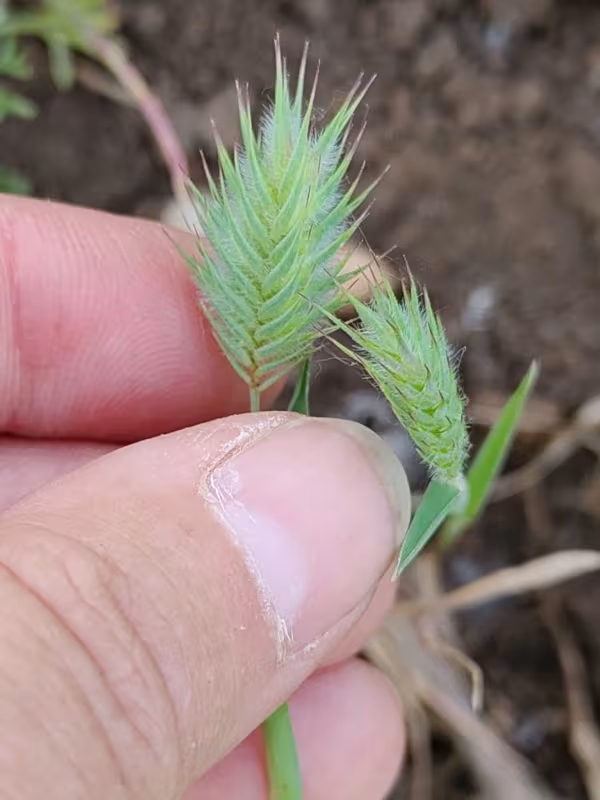
Description
Sowing dates
Oriental false wheatgrass is an early-spring ephemeral grass, meaning optimal sowing times occur immediately after the snow melts. In natural ecosystems, seeds germinate at low positive temperatures, allowing the plant to maximize the use of moisture from the winter-spring period.
When cultivating in agro-ecosystems, soil preparation begins in the fall with deep plowing to accumulate moisture. In the spring, minimal surface cultivation is necessary to prevent the topsoil layer, where the small seeds of the crop are located, from drying out.
The seeding depth for Oriental false wheatgrass should not exceed 1.5–2 cm. Excessive depth leads to the exhaustion of seedlings and their death before reaching the surface, as the plant has low initial growth energy.
Seeding rates are calculated based on high seed germination, but given the short growing season, it is recommended to increase stand density to create a thick sward. It is optimal to sow in a wide-row pattern or via conventional row seeding if there is sufficient moisture.
After sowing, rolling the soil is an essential agronomic practice. This ensures firm contact between the seeds and the substrate, which is critical for achieving uniform germination in the arid climates of semi-deserts and steppes.
Growing requirements
Oriental false wheatgrass is a typical member of the Poaceae family, adapted to extreme growing conditions. The plant's range covers the arid regions of Central Asia, the Caucasus, and Southern Europe, where it successfully withstands long periods of drought.
The plant is extremely undemanding regarding soil fertility. It thrives in chestnut, gray-earth (sierozem), and even saline soil types, making it a promising candidate for the reclamation of degraded lands and the stabilization of shifting substrates.
The primary factor for successful development is moisture availability during the tillering and jointing phases. As a typical ephemeral, Oriental false wheatgrass completes its life cycle before the summer heat peaks, so summer drought is not a limiting factor for it.
The crop prefers open areas with intense solar radiation. In shaded conditions or under high competition from tall perennial grasses, Oriental false wheatgrass quickly declines, yielding its place to more aggressive species.
For normal development, the crop requires moderate temperature regimes during the spring. Sharp temperature fluctuations and strong desiccating winds during the flowering phase can reduce pollen fertility, negatively impacting seed yield.
Yield
Economic use of Oriental false wheatgrass focuses on the creation of early spring pastures. Since the plant's biomass accumulates very rapidly, it provides livestock with nutritious green forage during a period when other grasses have not yet entered their active growth phase.
Green matter yield depends heavily on the amount of winter precipitation. In favorable years, the crop can form a sufficiently dense sward, suitable for both grazing (sheep and camels) and hay harvesting before the stems become coarse.
An important aspect is that as seeds mature, the vegetative organs of the plant quickly harden and lose nutritional value. Therefore, the usage period for Oriental false wheatgrass as a forage crop is limited to the phase before heading.
Seed yield indicators for Oriental false wheatgrass vary depending on the year's conditions. With correct agronomy and lack of competition, stable seed yields can be achieved, which is important for the restoration of natural grazing lands.
Using this grass in crop rotations helps restore soil structure. The grass's root system facilitates aeration of the upper soil horizons, and the annual dying-off of the ephemeral adds organic matter to the substrate in conditions where other plants cannot survive.
Main diseases and pests
Due to its very short growing season, Oriental false wheatgrass rarely suffers from massive outbreaks of diseases typical for late-maturing crops. Nevertheless, under high-humidity conditions, the development of rust and powdery mildew is possible.
Key pests for young seedlings can include wireworms and beetle larvae, which damage the root system. During periods of massive locust outbreaks, Oriental false wheatgrass can be severely damaged by insects, as it is one of the first available green crops.
Rodents are a critical survival factor for the crop. In arid zones, vole populations can completely destroy crops during the milky-ripe seed phase, requiring timely protective measures.
To prevent the spread of fungal diseases, it is recommended to practice crop rotation and avoid overcrowded stands. In the event of an epiphytotic threat, systemic fungicides are applied in the minimum allowable doses.
Weed control in Oriental false wheatgrass stands is difficult because the crop itself is an early-season plant. The primary protection method is the preventive clearing of the site from perennial root-sprouting weeds before sowing the main crop.