
Distant desert grass
Eremopyrum distans
Description
Growing requirements
Distant desert grass (Eremopyrum distans) is an annual grass species belonging to the Poaceae family. This plant is well-adapted to extreme environmental conditions, typical of arid and semi-arid regions across Eurasia.
The species is native to dry steppe and desert habitats. Its life cycle is designed to capitalize on short periods of favorable moisture, usually in early spring, allowing it to complete its development before the peak of summer heat.
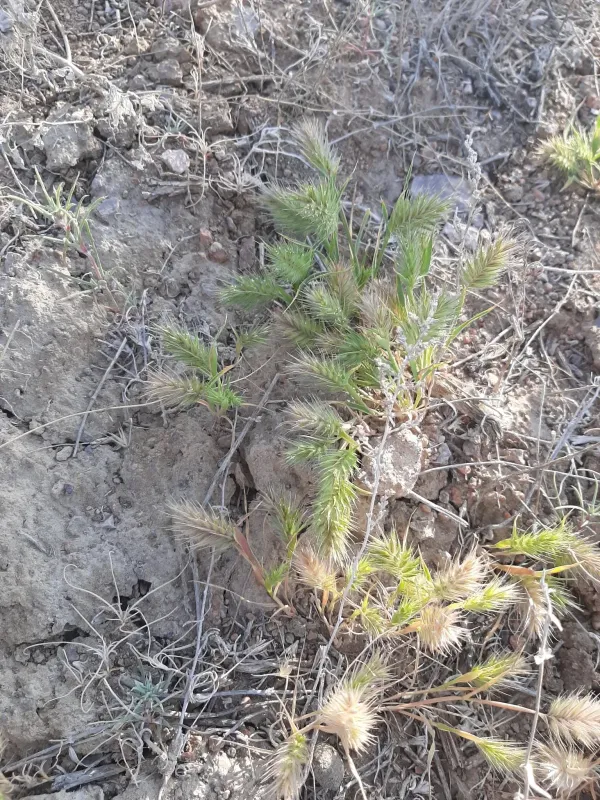
Botanically, it features slender, upright culms and characteristic spike-like inflorescences. The spikes are composed of somewhat distant spikelets, which gives the species its specific botanical name.
The plant is highly tolerant to diverse soil conditions, showing particular resilience on saline and alkaline substrates. This makes it a valuable species for regions where soil quality prevents the growth of traditional crops.
It requires full sun exposure and is highly sensitive to competition from dense canopy vegetation. Its climate requirements are relatively modest, focusing primarily on successful germination and establishment during the cool, moist phase of the season.
Yield
In agricultural practice, Eremopyrum distans serves primarily as a forage crop for livestock grazing in extensive production systems. It provides essential nutrients during the spring season when other forage sources are limited.
The nutritional value is highest in the vegetative stages before anthesis. Once the plant reaches the seeding stage, the palatability decreases as the stems become lignified and tough for most herbivorous animals.
Beyond its forage value, the species is an important tool for land reclamation and soil stabilization. By creating a dense root network, it effectively binds light soils and mitigates the effects of wind erosion.
Crop yields are variable and highly dependent on rainfall distribution. In years with adequate early moisture, the production of green biomass is sufficient to support pastoral sheep and cattle grazing.
Management practices focus on ensuring the plant can reach its reproductive stage, as the annual nature of this grass relies on effective seed set to maintain population density for the following year.