
Fringed episcia
Episcia fimbriata
Description
Growing requirements
Episcia fimbriata is an ornamental herbaceous perennial belonging to the Gesneriaceae family. Originating from the tropical rainforests of South America, it is highly valued for its striking foliage and delicate, fringed flowers.
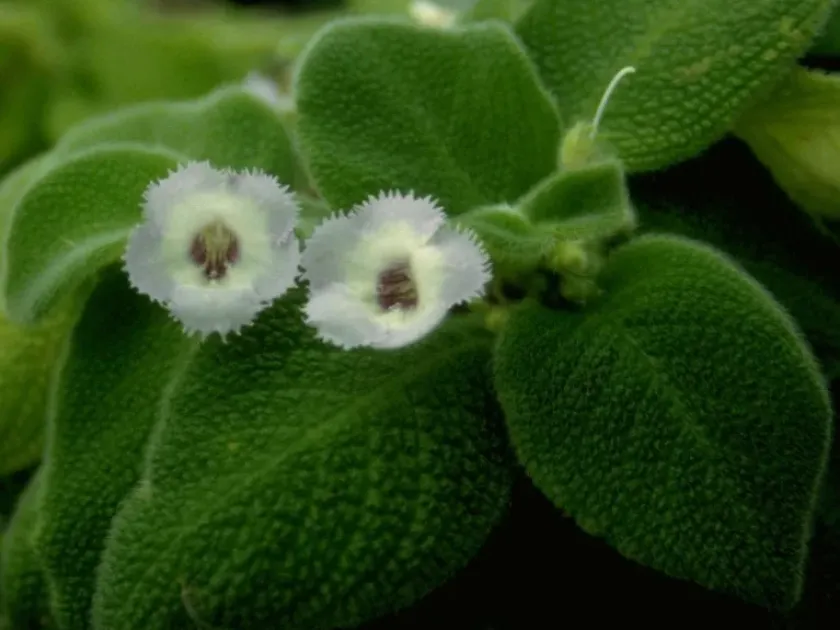
Botanically, the plant is characterized by creeping stems that easily root at the nodes. Its leaves are generally oval-shaped with serrated or fringed margins, often displaying a rich velvety texture with varying color patterns.
The culture requires a consistent climate with temperatures between 20 and 25 degrees Celsius. It thrives in high humidity environments, making it an excellent candidate for humidified indoor spaces or terrariums.
Regarding light requirements, Episcia fimbriata prefers bright, indirect sunlight. Exposure to direct harsh sun can lead to leaf scorching, while deep shade will cause the plant to become leggy and lose its vibrant coloration.
The ideal soil for this species must be light, porous, and nutrient-rich. A mix consisting of peat moss, perlite, and shredded sphagnum moss is commonly used to ensure optimal drainage and moisture retention.
Main diseases and pests
Root rot is the most significant threat to the plant, primarily caused by waterlogged soil and inadequate drainage. It is critical to ensure that the soil remains moist but never saturated to prevent fungal pathogens.
Pests such as spider mites and mealybugs are the most frequent attackers of fringed episcia. These thrive in warm, dry indoor conditions, making regular humidity management a vital part of pest prevention.
Treatment involves using insecticidal soaps or systemic pesticides suitable for ornamental indoor plants. Early detection is key, as these pests reproduce rapidly and can quickly compromise the plant's structural integrity.
Fungal leaf spot diseases may occur if air circulation is poor or if water is left sitting on the foliage for extended periods. Pruning affected leaves is necessary to stop the spread of infection.
To maintain long-term plant health, growers should rotate the plant occasionally to ensure even light exposure and monitor for signs of chlorosis, which may indicate nutrient deficiencies or overwatering.