
Epidendrum radicans
Epidendrum radicans Pav. ex Lindl.
Description
Growing requirements
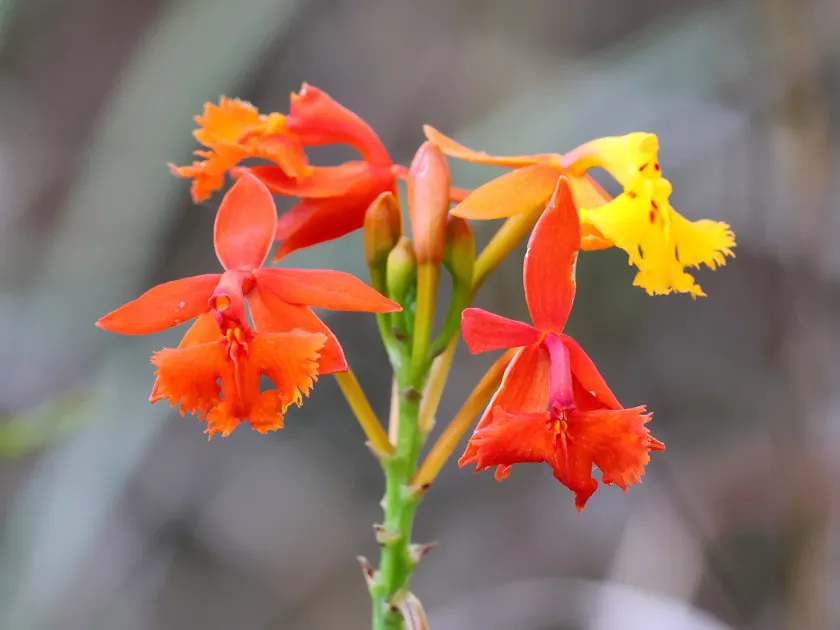
Epidendrum radicans is a species of orchid belonging to the Orchidaceae family, native to tropical regions ranging from Mexico to South America. Known for its persistent, climbing stems and clusters of vibrant orange or red flowers, it is widely valued in ornamental horticulture.
The plant thrives in bright, filtered light and requires a stable thermal environment between 20 and 26 degrees Celsius. Proper air circulation is essential, as the species is sensitive to stagnant, humid air which can promote fungal growth.
The cultivation medium must be highly porous, typically consisting of pine bark, charcoal, and perlite. This mixture facilitates rapid water drainage and prevents the root rot that often plagues epiphytic plants in captive conditions.
Watering should be performed regularly, allowing the substrate to partially dry out between sessions. Using low-mineral water is crucial, as the roots are sensitive to salt accumulation, which can cause leaf tips to brown and overall plant decline.
Humidity levels should remain consistently between 60% and 80%, which mimics the natural tropical habitat. Supplemental misting or the use of humidifiers is recommended, especially in indoor environments with controlled climate systems.
Main diseases and pests
Spider mites are the most common pests, thriving in the warm, dry conditions often found indoors. Regular inspection of the underside of leaves and keeping humidity levels high are the most effective preventive measures.
Root rot is a major threat caused by poor drainage or overwatering. If symptoms appear, the plant must be removed from its pot, and all necrotic root tissue should be pruned with sterilized tools before repotting.
Scale insects can attach themselves to the stems and leaves, extracting nutrients and weakening the plant. Mechanical removal combined with systemic insecticides is the standard treatment protocol for severe infestations.
Fungal leaf spot diseases can occur if water remains on the leaves for extended periods. Ensuring that the foliage is dry by nightfall helps to significantly reduce the risk of such infections.
Viral infections can cause mosaic patterns and stunted growth, necessitating immediate plant destruction to prevent transmission to other healthy specimens. Strict hygiene when handling and pruning is essential to maintain a healthy collection.