
Encelia canescens
Encelia canescens
Description
Growing requirements
Encelia canescens is a perennial subshrub species belonging to the Asteraceae family. It is native to the arid coastal desert regions of South America, specifically found in areas of Peru and Chile.
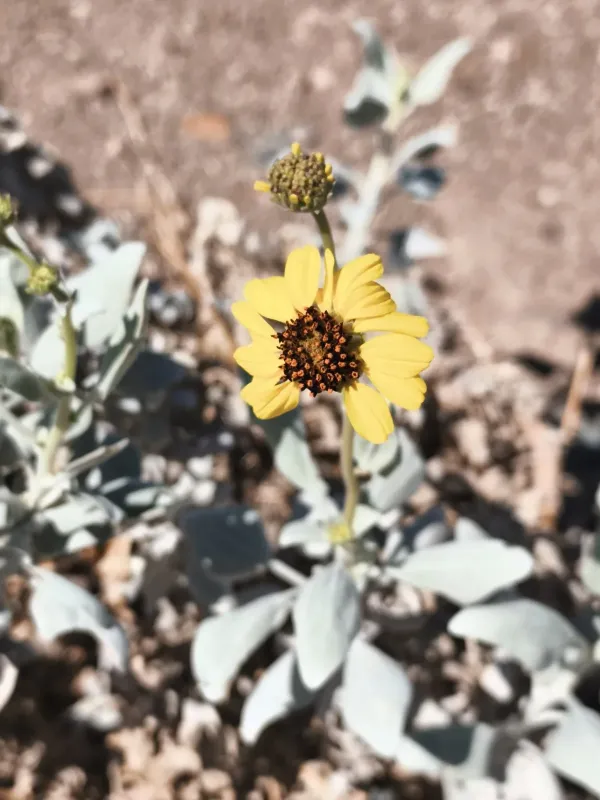
The plant exhibits distinct botanical features adapted for xeric conditions. Its leaves are covered with fine, silver-gray hairs, which reflect intense solar radiation and significantly reduce the rate of transpiration.
From an agronomic perspective, the species thrives in well-draining, sandy, or rocky soils. It is highly resistant to drought and requires intense solar exposure to maintain its compact and healthy growth habit.
Cultivation practices must prioritize moisture control. The substrate should be allowed to dry out completely between irrigation events to prevent root decay, which is the primary cause of failure in cultivation.
The main agricultural and horticultural application of Encelia canescens is in xeriscaping and environmental restoration. It is favored for its ability to stabilize loose soils on steep and arid slopes.
Main diseases and pests
The primary threats to Encelia canescens are fungal pathogens that thrive in high humidity environments. Poor soil aeration or improper watering schedules can trigger root rot and stem decay.
Spider mites represent a frequent pest concern, particularly in greenhouse conditions or during periods of low atmospheric humidity. They feed on the leaf tissues, leading to discoloration and eventual leaf drop.
Aphids can also colonize the tender tips of new growth. While rarely fatal, severe infestations can stunt the plant's development and reduce its aesthetic appeal in landscape settings.
Preventative measures include maintaining optimal air circulation around the plants and ensuring that the foliage stays dry during irrigation.
Integrated pest management should be applied if pests are identified. Using systemic treatments is effective, but mechanical control is often sufficient when the population density is low.