
Encalypta streptocarpa
Encalypta streptocarpa
Description
Growing requirements
Encalypta streptocarpa is a prominent species of moss belonging to the Encalyptaceae family. While not an agricultural crop in the traditional sense, this bryophyte serves as a vital biological component of calcicolous habitats in the temperate zones of the Northern Hemisphere.
This moss species is typically found on limestone outcrops, rocky crevices, and mineral-rich soils. Its distribution is strongly correlated with the presence of carbonate-rich substrates, as it exhibits a distinct preference for alkaline environments.
The plant demonstrates high adaptability to varied micro-climatic conditions, provided that humidity levels remain relatively stable. It thrives in well-lit areas but can persist in partial shade, where it utilizes available ambient moisture for metabolic activity.
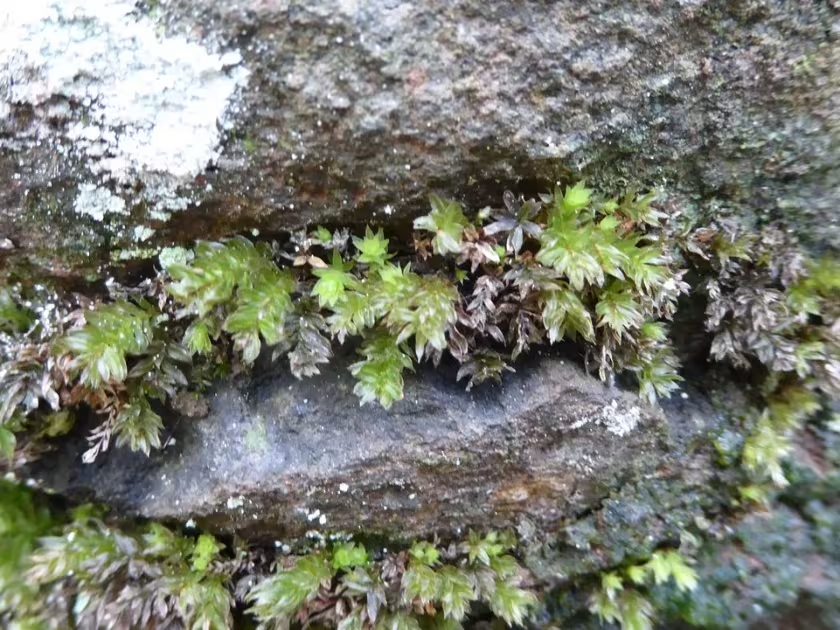
Botanically, it is characterized by its twisted capsule shape, which is a diagnostic feature of the species. The moss forms dense, dark green turfs that assist in soil stabilization and moisture retention in cliff-side environments.
Cultivation of this moss is generally not practiced for economic use; however, understanding its ecological requirements is essential for conservation biology and the restoration of natural limestone-based ecosystems.
Main diseases and pests
The primary threat to Encalypta streptocarpa is the habitat destruction caused by large-scale quarrying and industrial development in areas with limestone geological formations.
Changes in local hydrological cycles pose a significant risk, as the moss relies heavily on consistent atmospheric and soil moisture for its survival and reproductive processes.
Atmospheric pollution, particularly acid rain and chemical deposition, alters the soil pH, which negatively impacts the physiological health of this calciphilic organism.
Encroachment by higher vascular plants due to succession can lead to shading and the alteration of the moss's niche, effectively displacing the established populations.
While the plant is generally hardy, severe outbreaks of moisture-related fungi or pathogens can occur if environmental conditions deviate significantly from the species' evolutionary norms.