
Fringed extinguisher moss
Encalypta ciliata
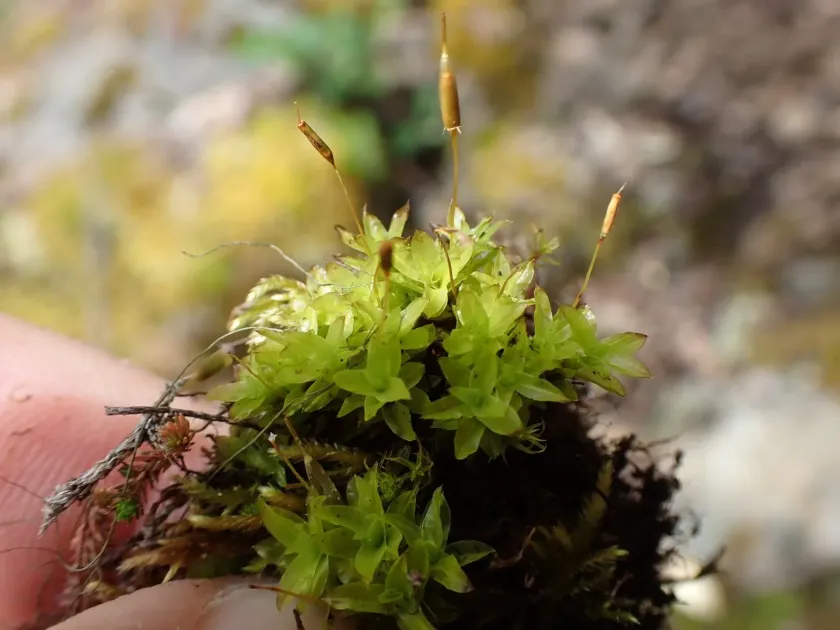
Description
Growing requirements
Encalypta ciliata, commonly known as the fringed extinguisher moss, is a perennial bryophyte belonging to the family Encalyptaceae. This plant is not an agricultural crop but a significant component of natural rocky ecosystems across the Northern Hemisphere.
The plant is botanically characterized by its unique calyptra, which covers the spore capsule and features distinct marginal cilia, giving it the common name. It typically forms dense mats or tufts in crevices of cliffs and rocky outcrops where soil is minimal.
Regarding its habitat, this species thrives in cool, humid environments with neutral to slightly basic substrates, particularly limestone or calcareous rocks. It requires stable moisture levels and protection from direct, harsh sunlight to maintain its physiological functions.
The moss shows high resilience to alpine climatic conditions, including freezing temperatures and cyclic moisture fluctuations. It does not require artificial fertilization, relying instead on minerals leached from the underlying rock surface and atmospheric nutrients.
In terms of ecological utility, Encalypta ciliata acts as a pioneer species in colonizing barren rock surfaces. It contributes to early soil formation processes by trapping wind-blown particles and organic matter, thereby enabling subsequent plant colonization.