
Elsholtzia ciliata
Elsholtzia ciliata (Thunb.) Hyl.
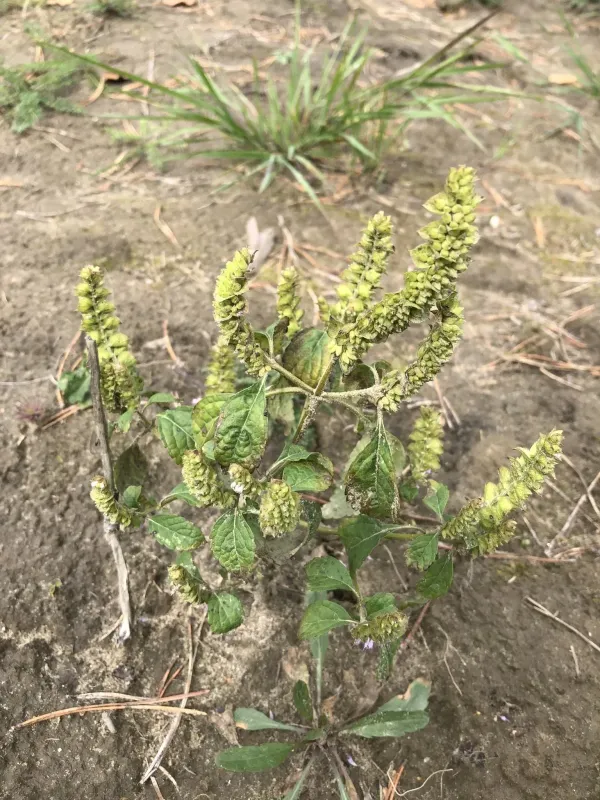
Description
Sowing dates
Elsholtzia ciliata belongs to the Lamiaceae family. It is an annual herbaceous plant widely cultivated for its aromatic properties and its utility in traditional medicine.
Sowing in open fields takes place in spring when the soil temperature consistently reaches 10–12 degrees Celsius. Late April is generally considered the optimal time for planting.
The seeds are very small, requiring shallow sowing at a depth of 0.5 to 1 centimeter. Row planting with a spacing of 30–45 centimeters is recommended to ensure proper growth.
For early harvest, the transplanting method is effective. Starting seeds in greenhouses during late March allows for a longer growing season and healthier initial plant development.
Seedlings typically emerge within 10–14 days. Thinning is necessary to provide 15–20 centimeters of space between individual plants to promote robust branching and foliage production.
Growing requirements
This plant thrives in warm climates and requires full sun exposure. Adequate light is essential for the synthesis of volatile oils, which define the plant's economic value.
While adaptable, the crop performs best in well-drained sandy loam or fertile loam soils. A neutral soil pH is ideal for optimal nutrient absorption.
Consistent moisture is required during the vegetative phase. While the plant has moderate drought tolerance, irrigation is critical for maximizing biomass in commercial production.
Field management focuses on weed control and soil aeration. Since the plant grows slowly in the early stages, mechanical cultivation or manual weeding is vital to prevent competition.
Fertilization with organic matter or balanced NPK fertilizers during the budding stage significantly boosts yields. Nutrient management should be tailored to soil test results.
Yield
Yield depends heavily on cultivation practices and water availability. Successful crops can produce between 15 and 20 tons of green biomass per hectare.
The primary economic output is its essential oil. The oil concentration is highest during full bloom, making the harvest timing crucial for high-quality production.
Intensive farming using drip irrigation systems often results in higher yields and better plant uniformity, which is highly desirable for processing facilities.
Seed production should be managed by allowing selected high-performing plants to reach full maturity. Properly stored seeds retain their viability for up to three years.
Effective stand management balances plant density. Proper spacing ensures high individual plant productivity while maintaining the desired total yield per unit area.
Main diseases and pests
Elsholtzia ciliata is generally resistant to pests but can be prone to root rot in overly saturated, poorly drained soils. Crop rotation is a primary preventative measure.
Aphids and spider mites are the most common pests, as they target the leaves. Biological control methods are preferred to maintain the herb's purity for medicinal use.
Weeds are the greatest threat during the early growth stage. If left unchecked, they can easily outcompete the herb, leading to significant yield losses.
Wireworms can occasionally affect root health in soils previously used for permanent grass. Proper soil preparation and pre-planting tillage are recommended.
After the harvest, all plant debris must be cleared to prevent the accumulation of pathogens. Maintaining field hygiene is essential for successive seasons.
Harvesting
The best time to harvest is during the peak flowering stage. Harvesting at this time ensures the highest quality of biomass and maximum concentration of active compounds.
Harvesting is usually done by mowing the aerial parts of the plants at 10–15 centimeters above the ground. Large-scale operations utilize machinery to streamline the process.
Post-harvest handling is critical; biomass should be transported to drying facilities immediately to prevent overheating and the degradation of essential oils.
Drying should be performed at temperatures not exceeding 40 degrees Celsius in shaded or ventilated areas. This temperature control preserves the volatile aromatic compounds.
Dried product should be stored in airtight, light-protected containers to maintain its medicinal quality and shelf life until it reaches the end user.