
Siberian ginseng
Eleutherococcus senticosus (Rupr. et Maxim.) Maxim.
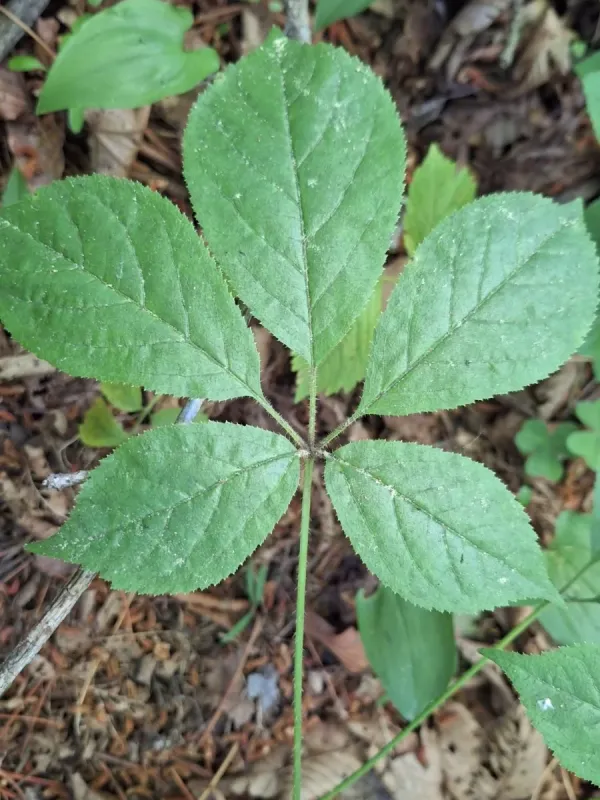
Description
Sowing dates
Eleutherococcus senticosus, commonly known as Siberian ginseng, is a hardy woody shrub belonging to the Araliaceae family. Propagation is primarily achieved through seeds, although they exhibit deep dormancy, requiring complex pre-treatment.
Seeds necessitate a long period of cold stratification, typically lasting 6 to 8 months. Sowing is usually performed in late autumn to allow the seeds to undergo natural environmental cycles, ensuring germination in the following spring.
Vegetative propagation is also widely used, involving hardwood or softwood cuttings taken from healthy mother plants. These cuttings are rooted in controlled environments such as propagation frames with mist systems to maintain high humidity.
Seedlings are transplanted to the field at 2 or 3 years of age once they have developed a robust root system. Proper spacing is crucial, with standard arrangements allowing 2.5 to 3 meters between rows to facilitate machinery access.
The plant originates from the temperate forests of Northeast Asia, particularly the Russian Far East, Korea, and China, where it thrives in the understory of coniferous and deciduous forests.
Growing requirements
Siberian ginseng requires well-drained, fertile soil, ideally sandy loam or loamy soils rich in organic matter. A soil pH ranging from slightly acidic to neutral is optimal for nutrient absorption.
While the plant is shade-tolerant, it performs best in environments with dappled sunlight. Excessively dense shade reduces the concentration of eleutherosides, which are the primary active compounds in the root system.
Water management is vital; while the plant requires consistent soil moisture during the growing season, waterlogging must be strictly avoided as it leads to root decay and fungal infections.
Regular fertilization with organic matter like compost or well-rotted manure helps maintain soil structure. The application of balanced fertilizers during the early stages of growth can significantly accelerate development.
The species is highly frost-tolerant, allowing it to survive harsh winters. However, young plants benefit from mulching to protect the shallow root system from extreme fluctuations in soil temperature.
Yield
Commercial harvesting focuses on the roots and rhizomes, which are the primary source of medicinal compounds. An economically viable harvest is typically achieved 6 to 8 years after field planting.
Average yield for mature plantations can reach several tons per hectare, depending on soil quality and cultivation intensity. The drying process typically reduces the raw biomass to about 30–40% of its initial weight.
The market for Siberian ginseng is driven by its use in herbal medicine as a potent adaptogen. High demand for quality raw material ensures a stable value for producers willing to invest in long-term cultivation.
Selective harvesting, where only a portion of the root system is removed, allows the plants to regenerate and continue growing, making the plantation a sustainable source of income for years.
Quality control standards require specific concentrations of active ingredients, which are often highest in older, slow-growing plants established in well-drained, sun-exposed forest margins.
Main diseases and pests
The crop is generally resilient but can be affected by various fungal diseases, especially leaf spot and root rot, if humidity levels are not managed correctly in a field setting.
Aphids and mites are common pests that target young shoots, potentially stunting growth. Integrated pest management strategies, including the use of biological controls, are recommended for maintaining plant health.
Rodents and voles can pose a significant threat to the root systems during winter months. Protecting the base of the shrubs and maintaining a clean plantation floor can reduce the attractiveness of the site to these pests.
Poor soil aeration resulting from compaction or heavy clay can predispose the plants to soil-borne pathogens. Deep cultivation between rows prior to planting is a necessary preventive measure.
Sanitary pruning of dead or diseased branches helps improve air circulation within the crown, significantly reducing the pressure from fungal pathogens and increasing overall plant vigor.
Harvesting
Harvesting is traditionally performed in the autumn after the aerial parts of the shrub have begun to senesce. This ensures that the concentration of secondary metabolites in the roots is at its annual peak.
Roots are extracted using specialized ploughs or manual tools, ensuring minimal damage. Once lifted, the roots are thoroughly washed to remove soil particles and carefully trimmed of stems and impurities.
Drying must be conducted in controlled environments with temperatures maintained between 40°C and 50°C. Rapid drying prevents enzymatic degradation of the active substances, ensuring high-quality final product.
Proper storage is essential; the dried material should be kept in well-ventilated, dry areas away from direct sunlight to preserve the medicinal potency and prevent moisture-related spoilage.
Standardized packaging, often in paper-lined containers or wood crates, allows for the necessary air exchange while protecting the product from physical damage during transportation to processing facilities.