
Southern globethistle
Echinops ritro L.
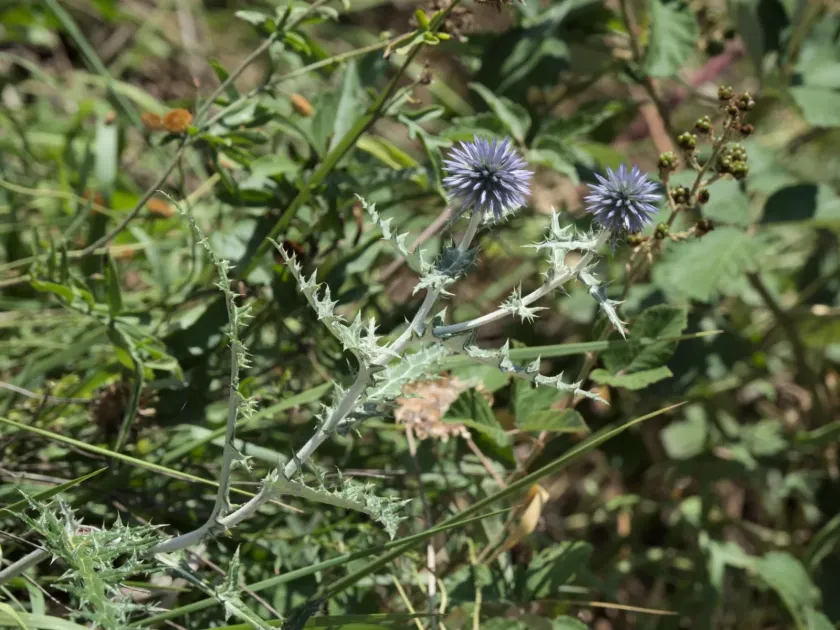
Description
Sowing dates
Echinops ritro is propagated by seeds, which is the most efficient method for commercial planting. Sowing is generally performed in early spring as soon as the soil warms up to 8–10 degrees Celsius, or in late autumn, in October, to allow for natural stratification of the seeds.
For optimal germination, seeds should be sown at a depth of 1.5 to 2 centimeters. When using a row-cropping method, the distance between rows should be about 60–70 centimeters, which facilitates easier maintenance and mechanical inter-row cultivation during the first year of the plant's life cycle.
During the first year, the crop develops slowly, forming a basal rosette of leaves, making it crucial to keep the plots weed-free. The use of herbicides during the early stages of development requires caution and the selection of chemicals compatible with perennial Asteraceae species.
The seeding rate depends on the chosen planting scheme and seed quality, typically averaging between 6 and 8 kg per hectare. It is important to use fresh seeds, as germination rates can significantly decrease after just one year of improper storage.
The optimal plant density at the time of flowering must ensure sufficient nutrition for each individual, as the plant develops a robust root system. Oversized planting densities can lead to reduced nectar production, which is a critical factor when cultivating the globethistle as a honey plant.
Growing requirements
Echinops ritro is a perennial herbaceous plant from the Asteraceae family, noted for its high drought tolerance and low maintenance requirements. It adapts perfectly to conditions in steppe and forest-steppe zones where other crops might suffer from a lack of moisture.
The plant does not have strict soil requirements, though it performs best in light, well-drained sandy or loamy soils. It cannot tolerate heavy, waterlogged soils with high groundwater levels, as this can lead to the rotting of its taproot system.
As a light-loving species, the crop requires fully open and well-lit areas throughout the day to ensure proper flowering and seed development. In shaded conditions, the plant becomes leggy, flowering is sparse, and nectar production drops significantly.
The plant demonstrates high frost resistance, capable of enduring harsh winters without any additional protection. Its deep-penetrating root system allows the plant to efficiently utilize moisture from deeper soil layers during hot summer periods.
Agronomic practices include regular inter-row cultivation, especially during the first year of vegetation, and weed control. Starting from the second year, the globethistle spreads out and becomes quite competitive, suppressing most weeds in the inter-row spaces.
Yield
The primary economic use for Echinops ritro is apiculture, as it is considered one of the best late-summer honey plants. Nectar production can reach 300–600 kg per hectare under favorable weather conditions.
Globethistle honey is characterized by a light color, pleasant aroma, and high quality. The flowering period is prolonged, providing bees with a steady supply of nectar when many other plants have already finished blooming, which significantly boosts overall apiary productivity.
Seed yield is also relevant for seed production farms focusing on medicinal plant cultivation. One hectare can yield up to 300–500 kg of seeds, provided that good agricultural practices are followed and harvesting is performed in a timely manner.
The plant is also used in pharmacology due to its content of the alkaloid echinopsine. It is harvested as raw material for medicinal preparations used in the treatment of nerve disorders, paresis, and paralysis, making these plantations economically profitable.
The crop remains productive in the same location for up to 5–7 years, after which the plantation should be replanted. Its long-term productivity makes Echinops ritro an attractive target for long-term investments in the agricultural sector.
Main diseases and pests
Echinops ritro possesses high natural resistance to diseases, which minimizes costs associated with pesticide treatments. Nevertheless, in cases of poor management or waterlogging, the plants may become susceptible to root rot, which can destroy the entire plantation.
Among pests, wireworms are the most dangerous, as they damage the roots of young plants in their first year. To protect the crops, it is necessary to treat seeds before sowing with insecticides or manage the pest through proper crop rotation.
Leaf-eating insects and weevils may cause minor damage to the foliage during particularly dry years. However, in most cases, the plant's natural immunity allows it to cope with these pests without the need for chemical intervention.
During the flowering period, the flower heads can be damaged by various bug species that extract sap from the developing seeds, reducing both germination rates and seed weight. Monitoring pest populations during bud formation allows for timely intervention if the economic injury threshold is exceeded.
Disease prevention consists of proper soil preparation, ensuring adequate drainage to prevent water stagnation, and promptly removing infected plants from the field. Maintaining spatial isolation from wild-growing species of the same family helps reduce the risk of viral infections.
Harvesting
Harvesting Echinops ritro seeds requires careful attention, as the seeds ripen unevenly within the globular flower heads. The optimal time for collection is when the flower heads take on a grayish-brown hue and the seeds detach easily with a light touch.
For commercial harvesting, combine harvesters with specialized attachments are used, or the crop is mowed, left to finish ripening, and then threshed. It is crucial to perform the harvest during dry weather to avoid seed dampness and mold development during storage.
Collected seeds must be cleaned of plant debris and dried in well-ventilated areas to a moisture content of 10–12 percent. Storage should take place in dry, dark warehouses using cloth bags that allow for air circulation.
If the cultivation goal is the production of medicinal seed material, harvesting is done in several passes as the upper flower heads ripen. This approach minimizes harvest losses due to seed shattering, as seeds fall out of the heads very easily during gusty winds.
When using globethistle primarily as a honey plant, harvesting is not strictly necessary. However, mowing the above-ground parts after the flowering season and the first frosts helps the plants overwinter better and reduces the number of pests hibernating in the field.