
Sanguine purple coneflower
Echinacea sanguinea
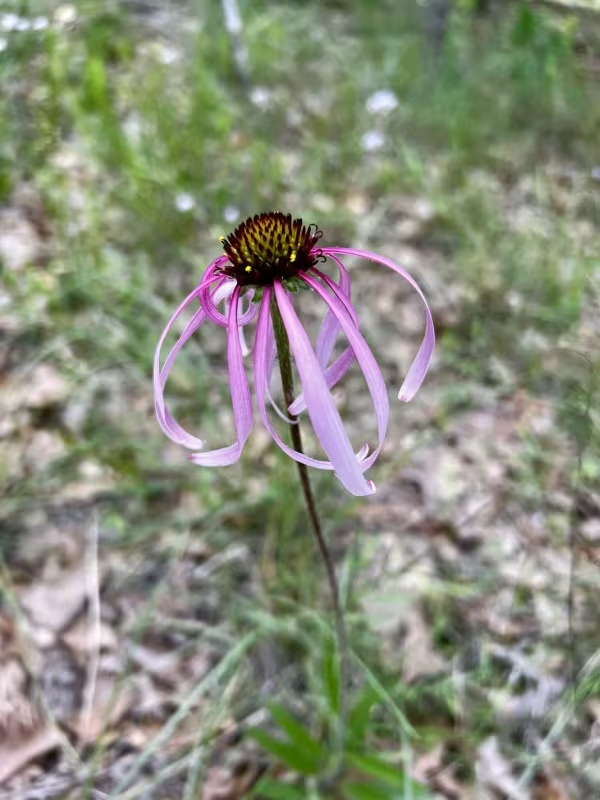
Description
Sowing dates
Sowing of Echinacea sanguinea is best performed in the spring once the soil temperatures have consistently reached 10–12°C. Late autumn sowing is also viable as it allows for natural cold stratification.
Seeds should be planted in rows with 45–60 cm between them to allow for efficient weeding and air circulation. The optimal planting depth is 1.5–2 cm, as deeper sowing often results in poor germination rates.
Seedlings typically emerge within 15 to 20 days. Maintaining adequate moisture in the topsoil is crucial during this period to ensure successful establishment of the crop.
This perennial crop can remain productive for 5–6 years on the same field. After this period, plant vitality may decline, necessitating a rotation to a new area.
A density of 6–8 plants per square meter is recommended to balance competition for nutrients while ensuring individual plant vigor and yield potential.
Growing requirements
Echinacea sanguinea is a perennial member of the Asteraceae family native to the prairies of North America. It thrives in full sun conditions, which are essential for robust growth.
The plant prefers well-drained, fertile loamy soils with a neutral or slightly alkaline pH. It is notably drought-tolerant once established due to its deep taproot system.
It displays excellent cold hardiness, well-suited for temperate climates. However, in regions with very little snow cover during harsh winters, mulch application is advised to protect the crowns.
Waterlogging is extremely detrimental to this species. Poor drainage often leads to root rot, so selection of elevated or well-drained planting sites is non-negotiable for commercial production.
Cultural practices should emphasize consistent weed control during the first growing season, as young coneflowers are poor competitors against aggressive weeds.
Main diseases and pests
Powdery mildew is the most common fungal disease, typically appearing as a white dusting on leaves during periods of high humidity and stagnant air.
Root rot caused by pathogens like Fusarium and Phytophthora represents a major threat in fields with poor drainage or excessive irrigation levels.
Aphids and various plant bugs are the most frequent insect pests. They feed on buds and foliage, which can stunt plant growth and reduce the quality of the harvest.
Weevil larvae can occasionally infest stems, leading to structural weakness and opening entry points for opportunistic secondary fungal infections.
Effective management includes implementing a strict crop rotation and ensuring sufficient spacing between plants to keep foliage dry and promote healthy growth.
Harvesting
The harvest of medicinal material, primarily roots, is typically conducted during the third or fourth year of growth when the accumulation of secondary metabolites is at its peak.
Roots are harvested in the autumn after the foliage has died back or in early spring before the new season's vegetative growth begins.
The aerial parts, including flowers and stems, are harvested during the peak flowering stage. Proper cutting heights are maintained to ensure the plant's health for future cycles.
All harvested material must be cleaned and dried promptly. Drying should occur in a shaded, well-ventilated area or in mechanical dryers at temperatures not exceeding 45°C.
Proper storage is essential to maintain the efficacy of the dried product. Store in opaque, moisture-proof containers in a cool, dark environment to preserve chemical integrity.