
Echinacea hybrids
Echinacea hybrids
Description
Sowing dates
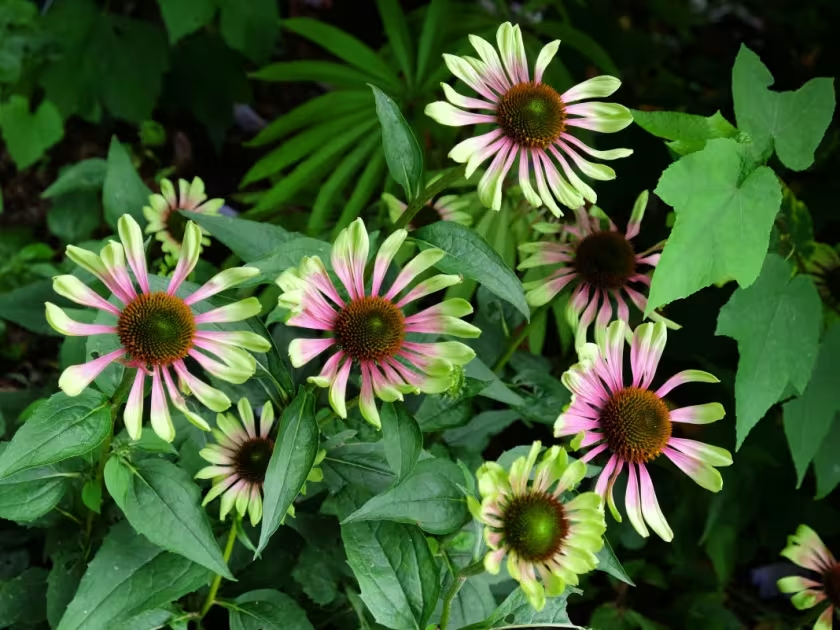
Echinacea hybrids are perennial herbaceous plants belonging to the Asteraceae family, created through the cross-breeding of various species within the Echinacea genus. Unlike wild native species, these hybrids offer a vast spectrum of petal colors and improved structural habits, making them ideal for both ornamental and medicinal cultivation.
Propagation is typically achieved through seed sowing or vegetative division of established clumps. Seeds are generally started indoors in late winter to ensure they are well-established by the time they are moved outdoors. Successful germination requires consistent warmth around +20…+22 °C, with seedlings emerging within two to four weeks.
Once the risk of spring frost has passed, seedlings should be transplanted into the prepared soil at a spacing of 40–50 cm. This spacing is vital to ensure adequate air circulation around the foliage, which helps to minimize the risk of humidity-related pathogens.
Agronomic management includes frequent weeding and inter-row cultivation during the first growing season, as the plants exhibit slow initial growth. Applying organic mulch is highly recommended to suppress weeds and maintain moisture levels in the root zone.
These hybrids serve multiple roles: they are highly attractive to pollinators as honey plants and are widely harvested in the agricultural sector for their phytochemical content. Their consistent growth form and long blooming period make them a staple in commercial nursery production.
Growing requirements
Echinacea hybrids thrive in full sun conditions, which is essential for developing vibrant petal colors and strong, sturdy stems. While they can tolerate partial shade, insufficient light often results in elongated, weak stems and reduced flower production.
The plants prefer fertile, well-drained loamy soils with a neutral or slightly alkaline pH. Proper soil drainage is critical; waterlogged conditions, especially during the dormant winter period, can lead to root crown rot and crop failure.
The climate requirements include moderate water availability during the peak growing season. While they are relatively drought-tolerant once established, supplemental irrigation during prolonged dry spells significantly improves the overall yield and health of the plant.
Fertilization should be balanced, focusing on promoting root development and floral output. Applications of compost or balanced granular fertilizers in early spring generally meet the nutritional needs of the crop, avoiding excess nitrogen that might encourage excessive foliage at the expense of flowers.
Winter care is minimal in temperate regions, though mulching is advised in areas with severe temperature fluctuations to prevent soil heaving. In colder zones, protecting the root crown helps ensure the survival and vigor of the plants for the following season.
Main diseases and pests
The primary threats to Echinacea hybrids are fungal infections driven by high humidity and poor site airflow. Powdery mildew is a common issue, manifesting as a white, dusty layer on the leaves, which can inhibit photosynthesis if left untreated.
Root and crown rots, caused by fungi such as Fusarium or Verticillium, pose a serious threat in heavy, waterlogged soils. Early symptoms include wilting and yellowing leaves; infected plants should be removed and destroyed immediately to prevent spread.
Pests like aphids and leafhoppers often target young, succulent growth. These insects suck sap and can act as vectors for viral diseases. Regular monitoring and the application of targeted insecticides or biological controls are recommended if pest populations exceed economic thresholds.
Slugs and snails can cause significant damage to young transplants in the spring. Implementing mechanical barriers or using eco-friendly bait can effectively manage these populations before they cause structural damage to the foliage.
Viral infections, such as aster yellows, result in stunted growth and distorted flowers. Since these viruses are incurable, strict phytosanitary measures, including the removal of infected plants and control of insect vectors, are the only effective management strategies.
Harvesting
Harvesting for medicinal purposes occurs during the peak flowering stage, which represents the point of maximum concentration of active phytochemicals. Stems with flowers and leaves are cut approximately 15 cm above the soil surface using clean, sharp tools.
Post-harvest processing requires drying the material in dark, well-ventilated areas. To preserve the integrity of the compounds, the drying temperature must be kept strictly between +40…+45 °C, as higher temperatures will degrade the active ingredients.
Roots are harvested in the autumn of the third year of growth. They are excavated, washed thoroughly to remove debris, and dried in specialized dehydrators until they reach a brittle, crackable state, ensuring long-term shelf stability.
For ornamental purposes, deadheading spent flowers throughout the season promotes continuous blooming and maintains the aesthetic appeal of the plant. If seed production is the goal, the most vigorous flowers are left to mature fully on the stems.
Proper storage is essential to maintain quality. Dried material should be kept in airtight containers away from direct light and moisture. Under these conditions, the shelf life of the medicinal raw materials typically ranges between 2 and 3 years.