
Dunbaria glandulosa
Dunbaria glandulosa
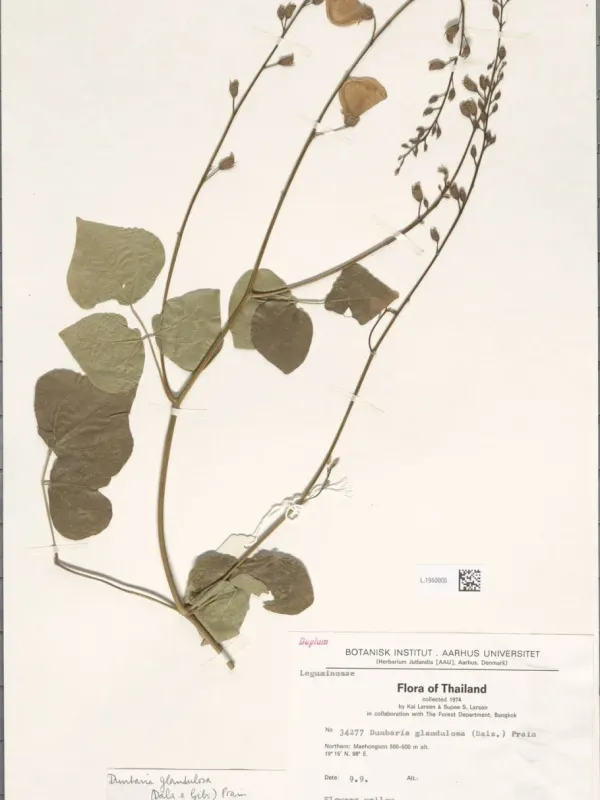
Description
Growing requirements
Dunbaria glandulosa is a member of the Fabaceae family, characterized by its distinctive glandular hairs on various plant parts. This legume is primarily recognized for its role in sustainable agricultural systems and its capacity for biomass production.
Native to parts of Asia, this species thrives in tropical and subtropical climates. It is highly valued for its adaptability, being able to persist in varying environmental conditions while maintaining structural integrity due to its robust root system.
The crop prefers well-drained soils with a balanced pH level. It performs exceptionally well in sunny locations where soil temperatures are sufficient for active growth, demonstrating resilience even in regions prone to seasonal moisture deficits.
One of the primary agronomic advantages of Dunbaria glandulosa is its nitrogen-fixing capability. By hosting specific bacteria in root nodules, the plant plays a crucial role in soil enrichment, making it a viable candidate for sustainable crop rotation.
In terms of usage, the crop is utilized for forage and green manure. Its high protein content makes it a valuable feed source for livestock, contributing to improved animal health and productivity when integrated into balanced grazing or feeding programs.
Main diseases and pests
Like many legumes, Dunbaria glandulosa is susceptible to fungal infections during periods of prolonged high humidity. Powdery mildew and leaf spot are common issues that arise when airflow between plants is restricted due to high sowing density.
Pest pressures often include root-feeding insects and foliage-chewing larvae. These organisms can severely impact plant vigor during the early vegetative stages, necessitating careful field monitoring and potential implementation of integrated pest management strategies.
Weed competition is a significant concern during the establishment phase. As the crop grows, effective weed suppression is required to ensure that resources such as water and nutrients are fully available to the primary crop rather than unwanted weeds.
Biological controls are highly recommended as part of a sustainable management plan. Encouraging natural predators, such as ladybugs or parasitic wasps, can help keep populations of aphids and other harmful insects below damaging thresholds.
Sanitation practices, such as removing infected debris from fields, play a vital role in preventing the recurrence of soil-borne pathogens. Adhering to diverse crop rotations will further mitigate the risk of pest and disease outbreaks over the long term.