
Dunbaria circinalis
Dunbaria circinalis
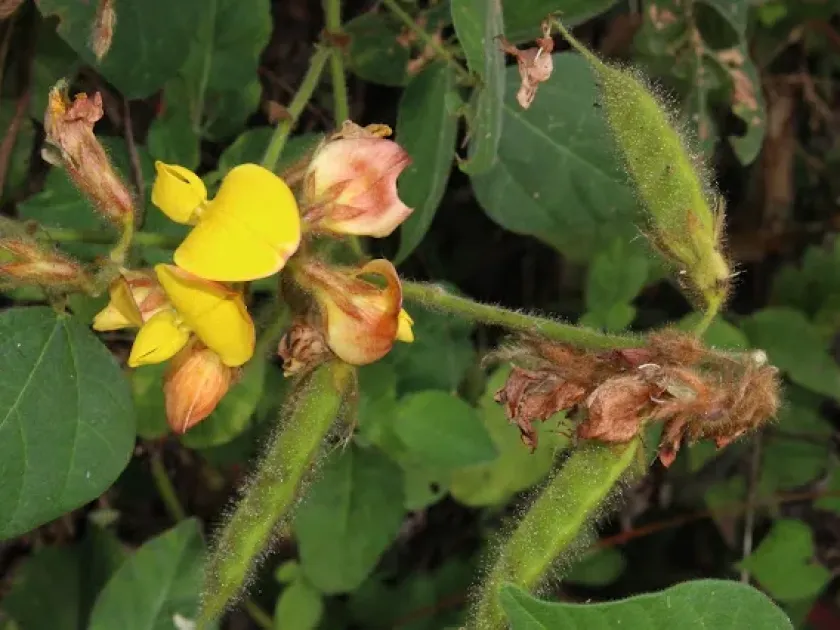
Description
Sowing dates
Dunbaria circinalis is a perennial vining legume belonging to the Fabaceae family, native to tropical and subtropical regions. For agricultural production, the timing of sowing is critical and usually aligns with the start of the rainy season to ensure sufficient moisture for seedling establishment.
Seeds should be sown in warm, well-prepared soil where temperatures remain consistently above 18°C. Scarification of the seed coat is highly recommended before planting to break dormancy and ensure uniform germination across the field.
The planting pattern should account for the plant's vining habit. Sowing in rows with adequate spacing, typically 60 to 90 centimeters apart, facilitates light penetration and provides sufficient air circulation, which helps in preventing excessive humidity around the root zone.
The ideal seeding depth is 3 to 4 centimeters. Planting too deep can hinder emergence, while shallow sowing poses a risk of desiccation. Careful placement in the seedbed is essential for the healthy development of the primary root system.
In mixed cropping systems, Dunbaria can be intercropped with other plants to act as a living mulch or cover crop. Sowing dates should be carefully coordinated with the primary crop to ensure mutual benefit and effective nitrogen fixation.
Growing requirements
This species thrives in tropical and subtropical climates and is highly adaptable to various soil types, ranging from sandy loams to rocky soils. Its nitrogen-fixing ability allows it to perform well even in soils with low nutrient content.
Sunlight is a key requirement for healthy growth. Dunbaria circinalis requires full sun exposure for optimal biomass production. Shaded environments often lead to sparse development and reduced flower and seed set, limiting the plant's overall utility.
Proper drainage is essential. While the plant can tolerate short-term drought, it is highly sensitive to waterlogging. Excess moisture around the roots frequently leads to fungal diseases and root decay, significantly reducing the lifespan and productivity of the stand.
The temperature range for active growth is between 20°C and 32°C. The plant is extremely sensitive to frost, which can kill the entire above-ground biomass. Cold tolerance is virtually non-existent, confining its viable production to frost-free areas.
Providing structural support is an important agronomic requirement for maximizing harvestable yield. While the plant can grow without trellises, supporting the vines improves light capture and simplifies maintenance and harvesting operations.
Yield
Dunbaria circinalis is primarily utilized as a high-protein forage crop for livestock. Its foliage is highly palatable and nutritionally valuable, providing a significant source of protein in diets for ruminants.
Biomass yield depends largely on soil fertility and moisture availability. With good management, the crop can withstand multiple cuttings per season, provided that the cutting height is sufficient to protect the vegetative buds and ensure regrowth.
Seed production is another aspect of its agricultural utility. Seeds are harvested for future planting or potential commercial use. However, the irregular ripening of pods requires careful monitoring and manual harvesting techniques to minimize yield losses from pod shattering.
As a legume, it contributes significantly to soil health by fixing atmospheric nitrogen. This makes it an excellent choice for crop rotation systems where it can serve as a green manure to replenish soil fertility for subsequent, more demanding crops.
While large-scale mechanized production remains limited due to its climbing nature, the crop shows promise as a sustainable resource in small-scale farming and restoration ecology where manual harvesting is feasible.
Main diseases and pests
Pest management is a crucial factor in the cultivation of Dunbaria circinalis. Bruchid beetles are among the most significant threats, as they can devastate stored and maturing seed crops, rendering them unsuitable for future planting.
Fungal pathogens such as powdery mildew and various leaf spot fungi often appear during periods of high humidity. Preventive measures like maintaining adequate plant spacing and ensuring good airflow are vital to keeping these diseases under control.
Root rot is a common issue when the soil remains too wet for prolonged periods. The best prevention strategy involves maintaining well-drained soil and avoiding over-irrigation during the cooler, less active growth phases of the plant.
Aphids and spider mites may infest the plant during hot, dry spells, weakening it and potentially spreading viral infections. Integrated pest management strategies, emphasizing biological controls, are preferred to maintain the quality of the fodder.
Weed management during the initial growth stages is important until the canopy closes. Once the plant is established, its vigorous vining habit usually allows it to outcompete most weeds, but early care is essential to ensure a uniform and productive stand.
Harvesting
Harvesting for forage should take place during the phase of peak vegetative growth, before the stems become overly fibrous and lignified. This ensures that the livestock receives the highest protein content and digestibility possible.
When harvesting seeds, focus on the maturity of the pods. Harvesting should occur once the pods turn dark and dry. To prevent pod shattering, it is advisable to harvest early in the morning when the humidity is slightly higher.
Post-harvest, the material must be dried in a shaded, well-ventilated area. Rapid, even drying is essential to prevent the development of mold, which could ruin both the fodder and the seeds if stored improperly.
Incorporate the plant residues into the soil after the final harvest. This organic matter recycling helps improve soil structure and fertility, supporting the long-term sustainability of the agricultural plot.
Storage of the cleaned seeds should occur in airtight containers to protect them from pest infestation. Keeping the storage area cool and dry will help maintain high germination energy for several seasons.