
Drimiopsis barteri
Drimiopsis barteri
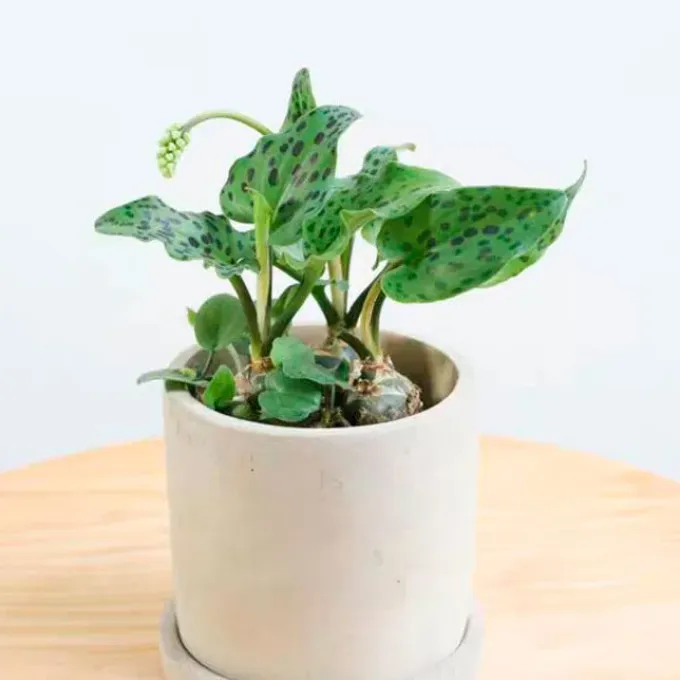
Description
Growing requirements
Drimiopsis barteri is a perennial bulbous plant belonging to the Asparagaceae family. Originating from the tropical forests of West Africa, this species thrives in understory conditions, where it is shielded from direct sunlight and benefits from high organic content in the soil.
The plant features a compact rosette of heart-shaped leaves, frequently marked with dark spots, which enhance its aesthetic appeal. It propagates primarily through bulb offsets, which naturally cluster together, making it a robust grower in container cultivation.
Cultivation requirements involve providing bright, indirect light to maintain leaf coloration without causing foliage scorching. It prefers a temperature range between 20°C and 25°C during the growing season, with a slight decrease in temperature during the winter dormant phase.
The soil substrate must be highly porous and well-draining to prevent waterlogging around the bulbs. A mixture consisting of peat, coarse sand, and leaf mold or universal potting soil is optimal to ensure both moisture retention and adequate aeration for the roots.
Watering should be balanced: the soil should be kept consistently moist but never waterlogged. As a bulbous plant, it is sensitive to standing water, so a reliable drainage system in the pot is essential for long-term health and vigour.
Main diseases and pests
The most common disease affecting Drimiopsis barteri is bulb rot, which is primarily caused by overwatering or poor drainage. Infected bulbs become mushy and discolored, often leading to the sudden collapse of the foliage if not addressed promptly.
Pests such as spider mites are a major concern, particularly in indoor environments with low humidity. They typically settle on the undersides of leaves, causing yellow stippling and eventual leaf drop if the infestation is not controlled.
Mealybugs are another common pest, appearing as white, cotton-like masses in leaf axils or on the bulbs themselves. These insects weaken the plant by extracting sap and can also attract secondary fungal infections due to honeydew secretion.
Management of these threats involves a combination of mechanical removal and chemical control. Systemic insecticides or insecticidal soaps are usually effective, but application must be thorough to reach hidden pests in the tightly packed bulb clusters.
Preventative measures are critical: maintaining adequate spacing between plants, monitoring humidity levels, and ensuring that the top layer of soil dries out slightly before the next watering cycle will significantly reduce pest and disease pressure.