
Dragon lily
Dracunculus vulgaris
Description
Growing requirements
Dragon lily (Dracunculus vulgaris) is a striking perennial plant belonging to the Araceae family. It is native to the Mediterranean region, where it thrives in rocky, well-drained habitats and open meadows.
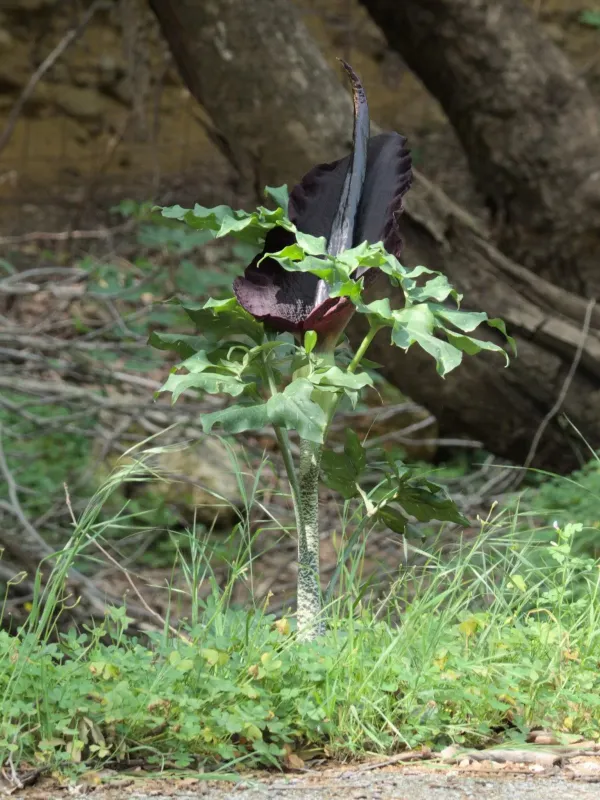
The plant is biologically distinct for its large tuber and spotted, palmately divided leaves. Its inflorescence is highly recognizable, featuring a large, dark purple spadix surrounded by a spathe of similar color, which is a key feature for ornamental interest.
Regarding soil requirements, Dracunculus prefers fertile, loose, and well-draining substrates. It is essential to ensure that the site does not collect standing water, as the tuber is highly susceptible to rotting in anaerobic conditions.
The species requires a climate with warm growing seasons. In colder regions, the tubers must be lifted and stored in a dry, cool environment during winter, as they lack significant frost tolerance, especially in wet soil.
In gardening and horticultural practice, it is utilized as an exotic specimen plant. While it is visually impressive, gardeners should note the potent scent emitted during pollination, which attracts flies and beetles, making it unsuitable for areas near patios.
Main diseases and pests
The primary threat to the crop is root rot caused by poor soil drainage and waterlogging. Once a tuber begins to decay due to fungal pathogens, recovery is rarely possible, necessitating the removal of the affected specimen.
Aphids are the most common pests observed on Dragon lily. They congregate on the developing foliage and inflorescence, potentially weakening the plant and encouraging the growth of sooty mold on the leaves.
Spider mites can also be problematic, particularly in greenhouses or during extended periods of drought. Their feeding activities cause discolored stippling on the foliage, eventually leading to senescence.
Management of these threats relies on cultural practices such as spacing for airflow and careful irrigation management. Avoiding overhead watering can significantly reduce the risk of leaf-related diseases.
Chemical intervention should be considered only if pest populations exceed economic thresholds. Using neem oil or specialized insecticidal soaps is often sufficient for maintaining plant health in a domestic garden setting.