
Dracunculus crassipes
Dracunculus crassipes
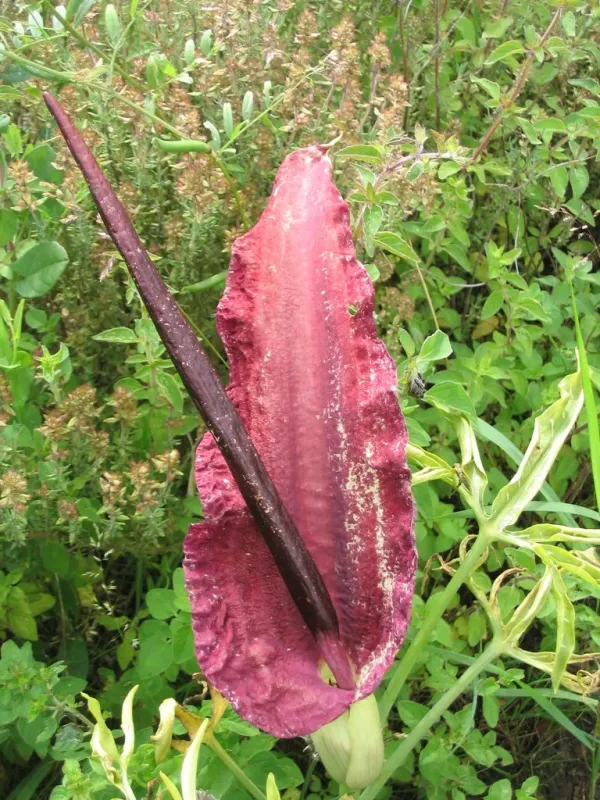
Description
Growing requirements
Dracunculus crassipes is a perennial herbaceous plant belonging to the Araceae family. It is a distinctive member of the genus, known for its unique botanical structure that differentiates it from the more common Dracunculus vulgaris.
The plant originates from specific Mediterranean habitats, often thriving in rocky and well-draining environments. Its distribution is limited, and it has adapted to survive in harsh climatic conditions where seasonal shifts are pronounced.
Botanically, it is defined by its substantial tuberous root system, which allows the plant to remain dormant during unfavorable environmental conditions. The foliage is typically palmate, displaying the intricate architecture common to many members of the Aroid family.
Cultivation requirements focus heavily on soil structure; it strictly demands a substrate with excellent aeration and drainage. In regions with high rainfall, the risk of tuber rot is high, making well-draining mineral-rich soil a primary prerequisite for successful growth.
The primary use of Dracunculus crassipes is within the sphere of specialized ornamental horticulture and botanical collections. It does not possess attributes that would make it suitable for large-scale agricultural exploitation or food production.