
Doryopteris collina
Doryopteris collina
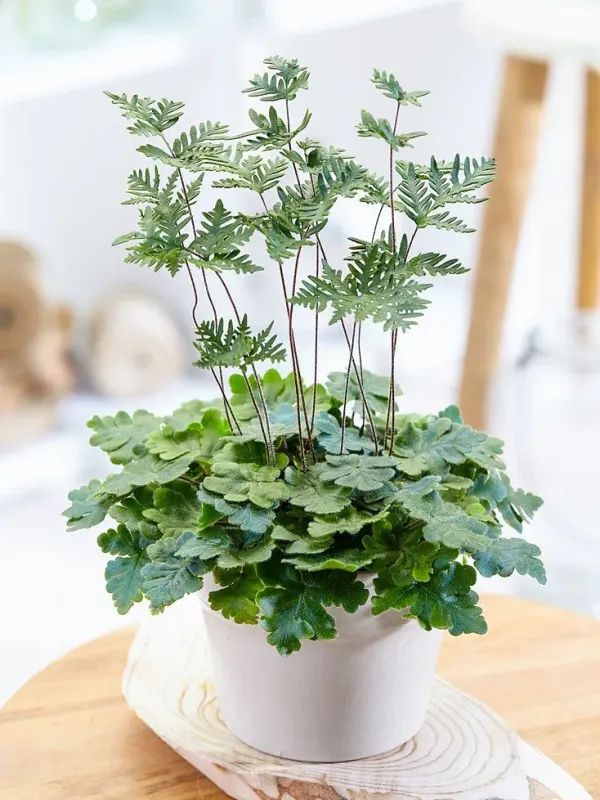
Description
Growing requirements
Doryopteris collina is a perennial fern belonging to the Pteridaceae family. This species is native to tropical Brazil, where it thrives in shaded, humid forest environments, characterized by well-drained but consistently moist soil conditions.
The plant requires a high humidity level, ideally between 60% and 80%, to maintain its lush appearance. In domestic settings, this is often achieved by grouping plants or using pebble trays filled with water to increase localized ambient humidity.
Regarding soil, Doryopteris collina prefers a loose, well-aerated medium. A mix containing peat moss, pine bark, and perlite is optimal to ensure efficient water drainage while maintaining the necessary moisture retention for root development.
Temperature management is critical for this crop; it flourishes in temperatures ranging from 18 to 24 degrees Celsius. It is highly sensitive to thermal stress, meaning exposure to frost or intense heat can lead to rapid physiological decline.
Lighting should be bright but indirect. As a woodland plant, it is adapted to filtered sunlight; placing it in a position with direct sun exposure will quickly cause leaf scorching and irreversible damage to the frond structure.
Main diseases and pests
Spider mites are the most common pest, especially in environments where humidity levels are inadequately managed. These pests thrive in dry air, feeding on the undersides of leaves and leading to fine webbing and yellowish discoloration.
Scale insects can occasionally infest the stems and leaves, extracting plant fluids and weakening the organism. Manual removal or the application of horticultural oils is effective for managing these infestations in small-scale plantings.
Root rot remains a frequent threat caused by overwatering. If the substrate remains saturated for prolonged periods, the root environment becomes anaerobic, which favors pathogenic fungi that destroy the plant's nutrient uptake mechanism.
Leaf spot diseases can manifest as irregular dark patches on the fronds, often caused by high leaf surface moisture coupled with poor air circulation. Improving ventilation around the foliage is a key preventative measure for these infections.
Mineral toxicity is another potential concern; Doryopteris collina is sensitive to high salt concentrations in the soil. Using high-quality, low-salt potting mixtures and ensuring occasional leaching of the substrate helps prevent nutrient accumulation.