
Mangrove trumpet tree
Dolichandrone spathacea
Description
Growing requirements
The Mangrove trumpet tree, scientifically known as Dolichandrone spathacea, is a medium-sized evergreen tree belonging to the Bignoniaceae family. It is a quintessential species found in coastal mangrove forests throughout tropical Asia and the Pacific.
The plant thrives in nutrient-rich, silty, and saline substrates typical of tidal zones. Its root system is highly adapted to waterlogged conditions, allowing the tree to maintain stability in unstable, sediment-heavy environments near the ocean.
Climatic requirements focus on a tropical environment with high, consistent temperatures and high humidity levels throughout the year. The species is light-demanding but can tolerate partial shade during its initial growth stages in the mangrove thickets.
Agricultural management of this crop requires minimal intervention if natural hydrological cycles are preserved. However, in reforestation efforts, monitoring soil salinity and preventing the accumulation of pollutants is critical for tree survival.
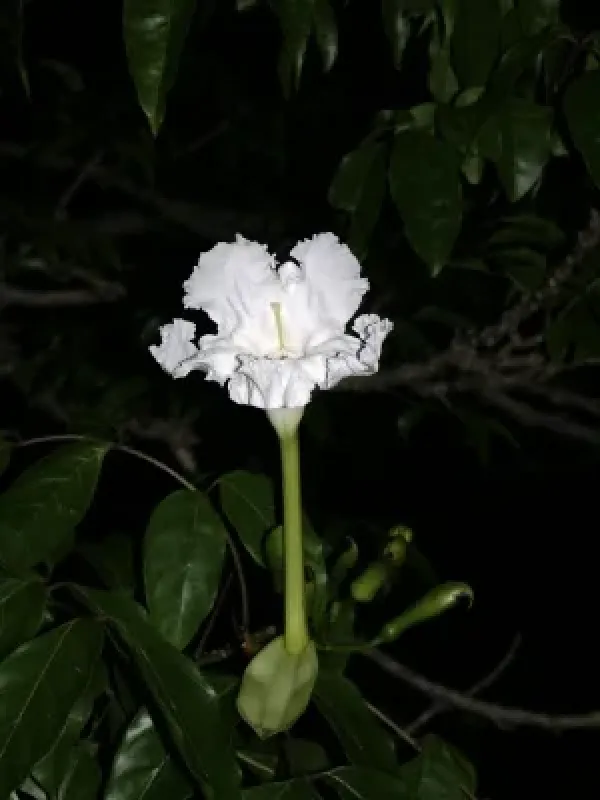
Botanically, the plant is famous for its large, fragrant white flowers that bloom at night and its elongated, pod-like fruits containing winged seeds. These seeds are dispersed by water, which is a key adaptation for its survival in tidal habitats.
Main diseases and pests
Major threats to Dolichandrone spathacea include coastal development and industrial pollution, which alter the delicate balance of the salt-water interface required for the tree to thrive.
Pest issues often arise from leaf-eating insects that can cause significant defoliation during dry seasons, reducing the energy reserves of the tree for the following blooming period.
Fungal pathogens associated with damp environments and poor air circulation within dense clusters can lead to root rot or branch dieback if not carefully managed.
Invasive plant species can compete with young Mangrove trumpet tree saplings, depriving them of necessary light and nutrient resources in the nutrient-dense mangrove sediments.
Climate change and rising sea levels pose a long-term threat, as rapid changes in water depth and frequency of tidal inundation can exceed the tree's natural physiological tolerance threshold.
Harvesting
The harvesting of this plant is generally limited to sustainable collection of non-timber forest products, such as its leaves, flowers, or bark, which are utilized in traditional medicine for various ailments.
The bark and flowers are often harvested by local communities with careful attention to not damage the main stem, ensuring the tree can continue to provide ecological services to the coastal area.
Harvesting of pods for seed collection occurs once they reach maturity and begin to split open. This requires precise timing to ensure the seeds are viable and fully developed before they disperse into the surrounding water.
In silvicultural practices, mature wood is rarely the primary harvest target, as the trees are more valuable standing for shoreline protection against erosion and storm surges.
When harvesting leaves for medicinal use, practitioners select healthy, fully formed foliage from various parts of the canopy to avoid stressing any single branch, maintaining the overall health of the tree.