
Hawaiian persimmon
Diospyros sandwicensis
Description
Growing requirements
The Hawaiian persimmon (Diospyros sandwicensis) is a native tree species belonging to the Ebenaceae family. It is endemic to the Hawaiian Islands, thriving in diverse habitats ranging from coastal dry forests to mesic and wet forest ecosystems.
This species is highly resilient, capable of growing on rocky, volcanic substrates where nutrient availability is often limited. It possesses a deep root system that allows it to withstand periods of water scarcity, characteristic of its natural environment.
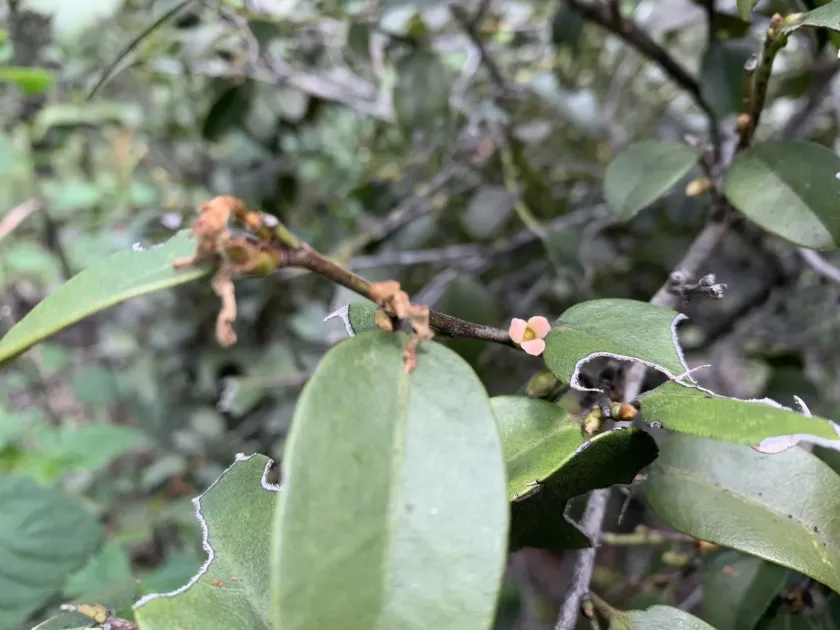
Botanically, the tree is recognized by its smooth, greyish bark and elliptical leaves that provide a distinct aesthetic. It can reach heights of up to 15 meters, though specimens in managed landscapes are often pruned to maintain a smaller, more manageable structure.
Climatic requirements are strictly tropical or subtropical, necessitating high humidity and consistent warm temperatures. The tree does not possess frost tolerance, making it highly unsuitable for cultivation in temperate zones without strict climate control.
While the tree produces small, edible fruits, its primary historical use has been its dense, hard wood. In modern agriculture, it remains a rare species, often maintained in botanical gardens or for conservation efforts rather than mass commercial production.
Main diseases and pests
The Hawaiian persimmon faces pressure from invasive insect species that target its foliage, often leading to significant stress in young saplings.
Fungal pathogens pose a constant risk in humid environments, particularly species that thrive in the rich, decaying organic matter found under forest canopies.
Scale insects are common pests, which attach to the stems and leaves, causing stunted growth and increasing the plant's susceptibility to secondary viral infections.
Root rot is a critical threat that manifests when drainage is inadequate, leading to the rapid deterioration of the plant's vascular system.
Management of these threats typically involves maintaining high sanitation standards in the cultivation area and ensuring proper spacing between plants to allow for airflow.