
Round-leaved persimmon
Diospyros rotundifolia
Description
Growing requirements
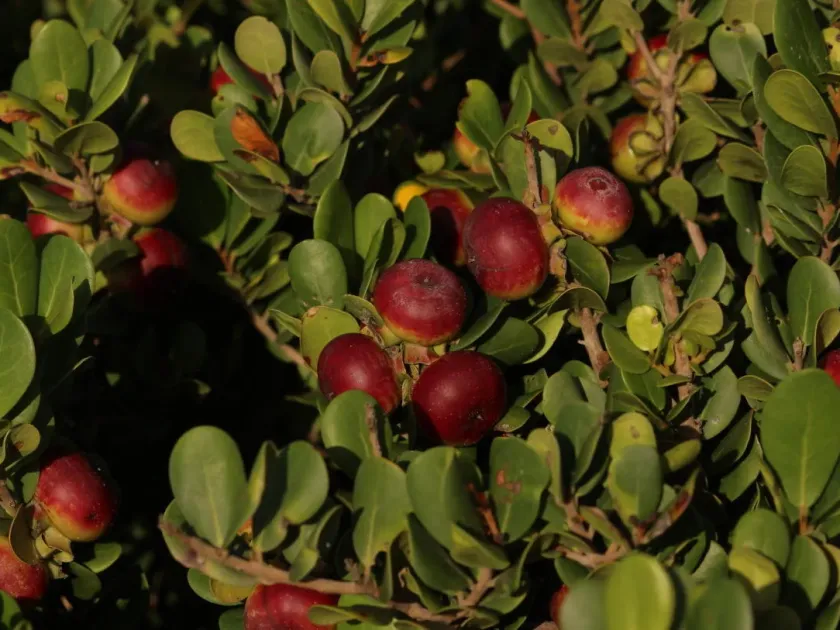
Round-leaved persimmon (Diospyros rotundifolia) belongs to the Ebenaceae family. It is an evergreen woody species notable for its distinct, nearly circular leaves and dense canopy, which can grow into a substantial tree under ideal conditions.
Native to Mexico, this plant is well-adapted to tropical and subtropical climates. It thrives in regions with stable temperatures and requires consistent sunlight throughout the year to maximize photosynthetic activity and ensure fruit set.
Soil requirements focus on high drainage capacity, as the species is sensitive to waterlogging, which can cause root rot. A slightly acidic to neutral soil profile is preferred, enriched with organic matter to support the initial development of young saplings.
Cultural practices include precise irrigation management, especially during the flowering and fruit development stages. Providing sufficient hydration during dry spells prevents premature fruit drop and ensures the berries reach their optimal size and sweetness.
Pruning is essential for maintaining tree structure, especially in commercial orchards. By thinning out the inner branches, growers improve airflow and light penetration, which significantly reduces the risk of moisture-related diseases in the canopy.
Yield
The tree produces small, edible fruits that represent a valuable genetic resource within the Diospyros genus. While the yield per tree is moderate compared to commercial persimmon cultivars, the high quality of the fruit makes it an interesting niche crop.
Main diseases and pests
Common pests include scale insects and various species of mites that colonize the leaves. Integrated pest management strategies, focusing on early detection and biological control methods, are highly effective for this plant.
Fungal leaf spot is the most prevalent disease, occurring primarily in humid environments. To mitigate this risk, it is recommended to avoid overhead irrigation and ensure the orchard layout allows for sufficient wind circulation.
Harvesting
Harvesting is performed manually to preserve the thin skin of the fruit, which is prone to bruising. Timing is critical, as fruits should be collected when they reach full color intensity, ensuring the best flavor profile for market distribution.