
Dionysia tapetodes
Dionysia tapetodes
Description
Growing requirements
Dionysia tapetodes is a slow-growing perennial member of the Primulaceae family. Native to the mountainous regions of Iran and Afghanistan, it is a highly specialized plant that thrives in crevice habitats.
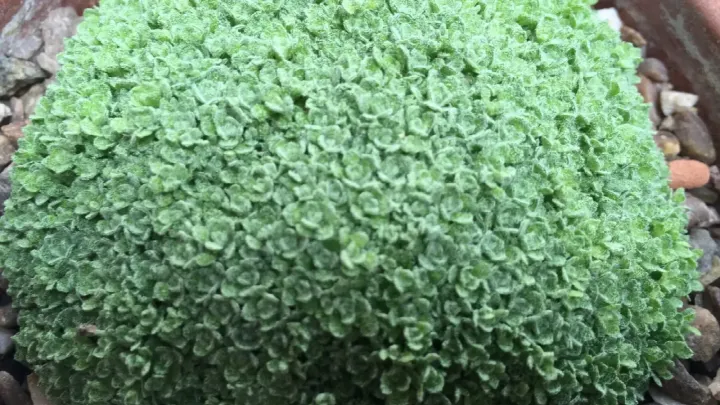
Botanically, it is classified as a cushion plant, forming dense, dome-shaped mats of foliage. Its morphology is an adaptation to high-altitude environments, characterized by small, dense leaves covered in fine glands.
For successful cultivation, the plant requires a strictly mineral substrate. A mixture of gravel, grit, and minimal loam provides the stability and drainage necessary to replicate its natural rocky outcrop environment.
Climatic requirements involve cool to moderate temperatures with exceptionally high air circulation. It is essential to protect the plant from high humidity, as it is prone to tissue rot in stagnant air conditions.
Watering techniques are critical for this species. It must be provided with water from beneath to keep the foliage dry, as moisture trapped within the dense cushion will inevitably lead to plant decay.
Main diseases and pests
The most significant threat to Dionysia tapetodes is root rot caused by overwatering. Ensuring the substrate is fully dry between waterings is essential to maintain plant health.
Spider mites are the most common pest, particularly during hot summer months when the air inside glasshouses can become dry and stagnant, creating ideal conditions for colonization.
Fungal infections, such as Botrytis, can manifest on the inner parts of the cushion if ventilation is insufficient, especially during the dormant winter period.
Root aphids may occasionally infest the root zone, particularly in container-grown specimens; regular inspection of the substrate is recommended for early detection.
To mitigate these risks, growers should prioritize air movement and maintain a strict dry-winter regime, as the plant is highly susceptible to opportunistic pathogens when wet.