
Dionysia cespitosa
Dionysia cespitosa
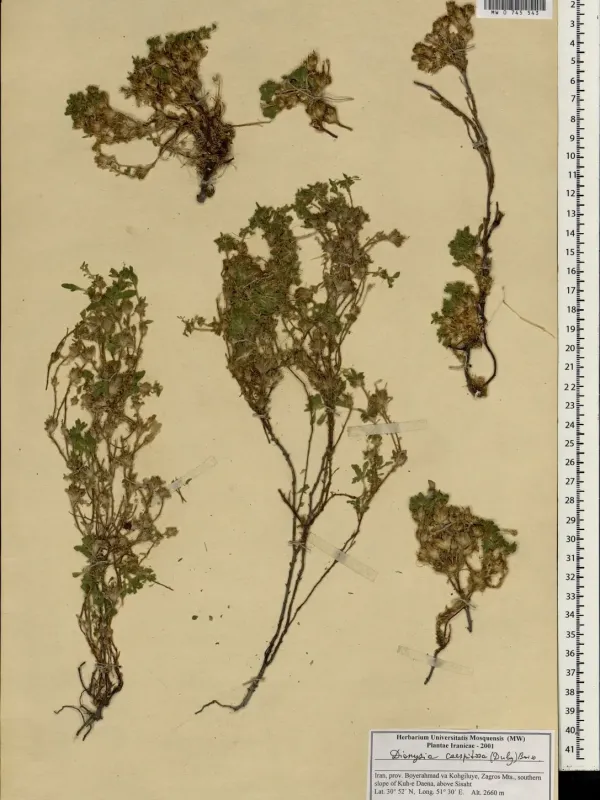
Description
Growing requirements
Dionysia cespitosa is a distinguished perennial plant belonging to the Primulaceae family. Native to the rugged mountain slopes of Iran, it has evolved to thrive in high-altitude environments characterized by poor, rocky substrates.
The plant exhibits a characteristic cushion-forming growth habit. Its tiny, densely packed rosettes are covered with glandular or simple hairs, reflecting its adaptation to survive intense exposure and nutrient-poor soils.
Successful cultivation of this species requires a specialized substrate composed largely of mineral components such as grit, pumice, and granite chips. It cannot tolerate rich, humus-heavy soils as they induce rot.
Environmental requirements include a cool, well-ventilated location with high light intensity. It is essential to protect the cushions from excess humidity, especially during winter months, to prevent the decay of the foliage.
Watering must be managed with extreme caution. The use of a top dressing of fine gravel around the neck of the plant is vital to ensure that foliage remains dry and does not come into contact with moist soil.
Main diseases and pests
The primary threats to Dionysia cespitosa are fungal pathogens, specifically those causing collar rot and crown decay. These conditions are almost always triggered by high humidity levels and stagnant air around the base of the plant.
Pests such as red spider mites may infest the cushions, particularly in glasshouse or indoor conditions. Controlling these pests requires careful monitoring and the maintenance of good air circulation to ensure plant health.