
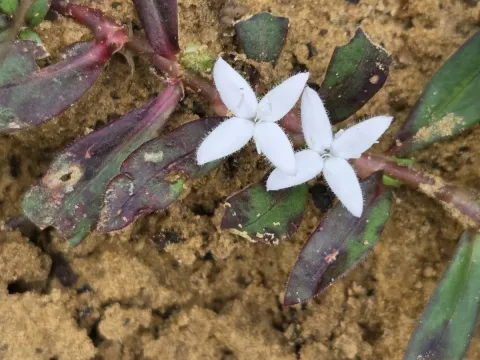
Diodia
Diodia Gronov.
Diodia is a genus of herbaceous plants belonging to the Rubiaceae family. In an agricultural context, these plants are primarily recognized as persistent weeds that thrive in various crop production systems globally.
What the section contains

Diodia
The genus originates from tropical and subtropical regions of the Americas. Over time, several species have naturalized in different parts of the world, becoming dominant in damp, cultivated habitats.
Botanically, Diodia species are distinguished by their opposite leaves, stipules, and small, inconspicuous flowers. Their growth habit allows them to form dense mats, which rapidly cover the soil surface.
Regarding environmental requirements, Diodia plants prefer moist, fertile soils. They are particularly successful in lowland agricultural fields where moisture levels are consistently high throughout the growing season.
Agronomic management requires integrated efforts. Due to the plant's prolific seed production and perennial root systems in some species, a multi-year control strategy is necessary to deplete the soil seed bank.
The primary concern for farmers is the competition for resources. Diodia, especially the species Diodia virginiana, competes aggressively with crops like rice and soybeans for water and nutrients, significantly impacting final yields.
While the plant is rarely consumed by major pests, it can harbor pathogens. This makes Diodia a potential reservoir for diseases that may eventually infect economically important crops if left unmanaged.
Herbicidal resistance is a growing issue. Constant use of the same chemical classes has led to decreased efficacy, urging agronomists to rotate modes of action to maintain control over the weed population.
Mechanical control methods are effective but limited by the plant's ability to propagate from stem fragments. Proper timing of cultivation is essential to ensure that fragmented plants do not re-establish themselves.
Overall, long-term success depends on a combination of crop rotation, strategic herbicide use, and maintaining strict field hygiene to prevent the spread of seeds across different plots of land.