
Diodia ocymifolia
Diodia ocymifolia (Willd.) Bremek.
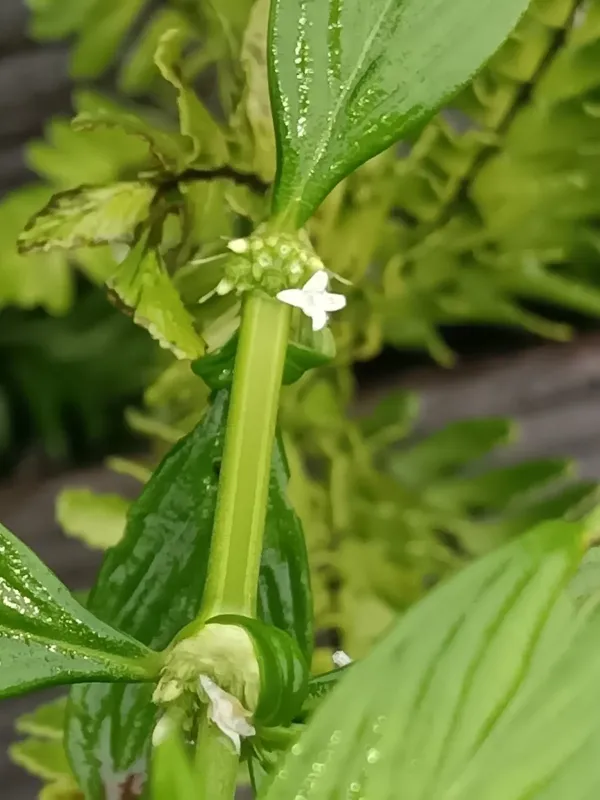
Description
Sowing dates
Diodia ocymifolia is a perennial herbaceous plant belonging to the Rubiaceae family. Native to tropical zones, this plant thrives in humid environments and requires consistent warmth throughout its growing season.
Propagation is typically performed via seeds sown in a moist, nutrient-rich soil mix. The seeds are small and require minimal soil coverage to ensure adequate exposure to light, which is crucial for germination.
Sowing should take place in controlled environments such as greenhouses or propagation trays to maintain stable temperatures of 22–26 degrees Celsius during the initial stages of development.
After the seedling reaches a height of 5–8 centimeters, it is transplanted into larger containers or field plots. Proper spacing is essential to prevent overcrowding and ensure adequate airflow.
Vegetative propagation via cuttings is also a common practice, allowing growers to achieve more uniform crop development and maintain desirable phenotypic characteristics.
Growing requirements
The plant requires well-drained, fertile soil with a slightly acidic profile. Soil compaction is a major inhibitor of root growth and must be mitigated through the addition of organic matter or perlite.
Diodia ocymifolia is sensitive to light intensity and performs best under partial shade. Excessive direct sunlight can cause leaf scorching and moisture stress in young plants.
Adequate moisture management is the most important factor in the agronomy of this crop. The soil must be kept consistently moist but never waterlogged to avoid root decay.
Temperature control is critical, as the plant does not tolerate frost. In non-tropical regions, it must be grown in protected structures where temperatures remain consistently above 15 degrees Celsius.
Balanced fertilization programs, particularly during the vegetative phase, ensure robust biomass production and plant health.
Main diseases and pests
The crop is susceptible to spider mites and aphids, which frequently infest the foliage under conditions of low humidity and stagnant air.
Fungal pathogens such as Rhizoctonia or Phytophthora are common threats in waterlogged or overly humid cultivation conditions, leading to root rot and systemic failure.
Management of these threats involves rigorous sanitation of the growing area and the removal of infected plant debris to prevent the spread of spores.
Integrated Pest Management (IPM) strategies, including the use of predatory mites, are recommended to control insect populations without relying solely on chemical treatments.
Regular monitoring of leaf surfaces is essential to detect early signs of chlorosis or physical damage indicative of pest or pathogen pressure.